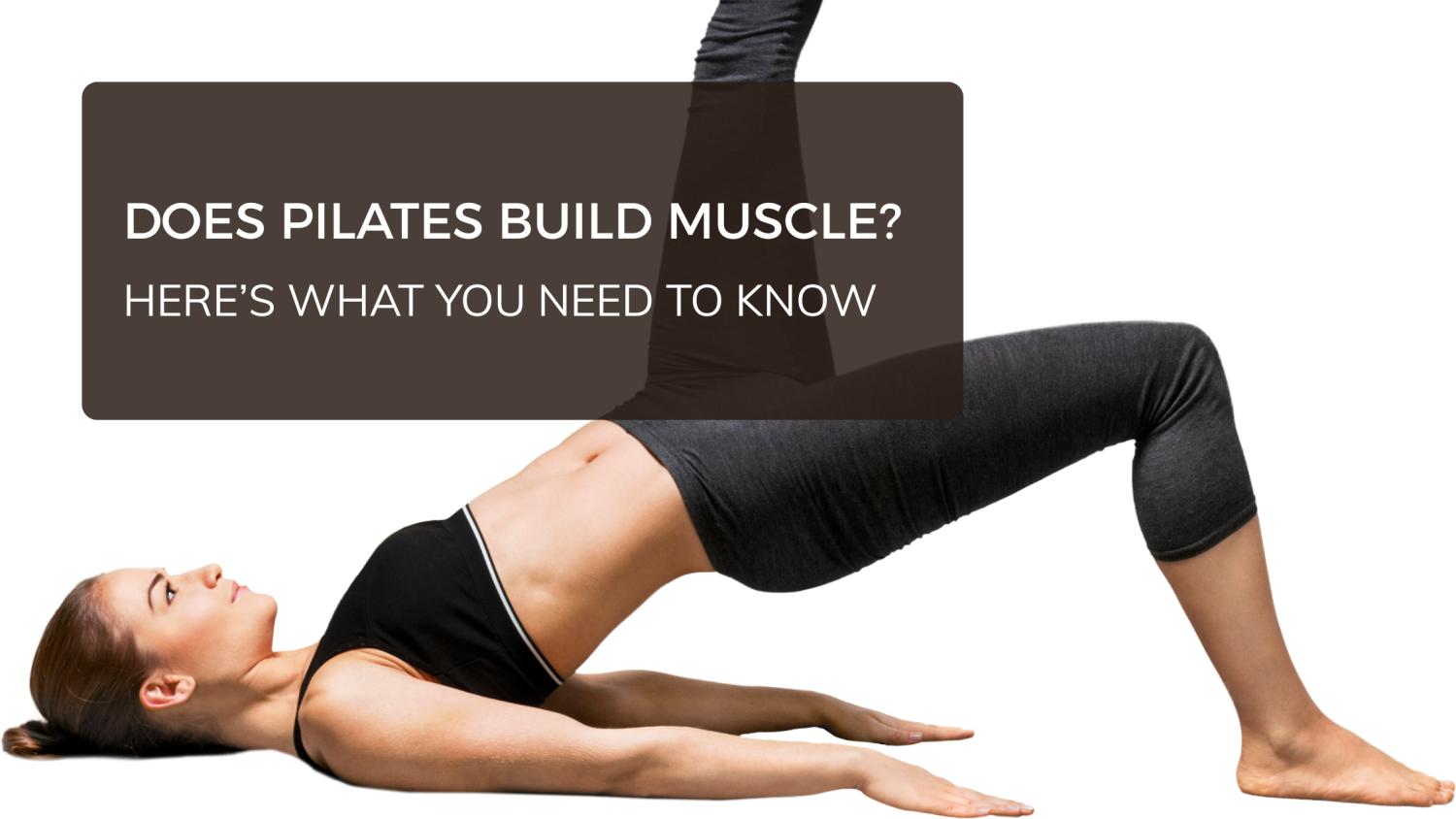
Does pilates build muscle

Does Pilates Build Muscle? Here’s What You Need to Know

One of the most common questions people ask before trying Pilates is whether it can actually build muscle.

If your image of building muscle involves lifting heavy weights at the gym, you might assume the answer is no. After all, Pilates relies on slow, controlled movements rather than barbells and dumbbells.

The reality is much more interesting.

Yes, Pilates can build muscle. It simply builds it differently than traditional strength training.

Rather than focusing on lifting the heaviest weight possible, Pilates emphasizes muscular control, endurance, stability, and precision. The result is a strong, balanced body that moves efficiently and feels capable in everyday life.

Can Pilates Really Build Muscle?

Absolutely.

Every Pilates exercise asks your muscles to remain engaged throughout the entire movement. Instead of using momentum, you’re constantly working against gravity while maintaining proper alignment.

Those sustained muscle contractions create strength over time.

While Pilates may not produce the same muscle size as a heavy bodybuilding program, it develops lean, functional muscle that supports posture, balance, and overall movement quality.

Many students are surprised by how challenging Pilates feels because the muscles remain under tension for longer periods than they expect.

What Kind of Muscle Does Pilates Build?

Pilates primarily develops muscular endurance and functional strength.

That means your muscles become better at working for longer periods while maintaining proper form and control.

Rather than training isolated muscles one at a time, Pilates teaches multiple muscle groups to work together. Your core, glutes, shoulders, hips, back, and legs are constantly communicating to stabilize your body throughout each exercise.

This creates balanced strength instead of simply stronger individual muscles.

It’s one of the reasons Pilates often improves the way people move long before they notice physical changes in the mirror.

Does Pilates Create Lean Muscle?

One phrase often associated with Pilates is “long, lean muscles.”

While exercise doesn’t actually change the length of your muscles, Pilates can absolutely help create the appearance of a leaner, more balanced physique.

Because Pilates combines strength with mobility and posture, many people begin standing taller, moving with greater confidence, and carrying themselves differently.

As muscles become stronger and body alignment improves, the overall appearance of the body often changes as well.

Many students notice improved muscle definition in their arms, legs, glutes, and core after practicing consistently for several months.

Is Pilates Enough to Build Strength?

For many people, yes.

If your goal is improving everyday strength, posture, balance, and overall fitness, Pilates can absolutely be an effective primary workout.

However, your goals matter.

If you’re strength training specifically to maximize muscle size or significantly increase maximal strength, traditional resistance training with progressively heavier loads may also have a place in your routine.

The good news is that these approaches work exceptionally well together.

Many people combine Pilates with strength training because each fills a different role. Weight training develops maximum force, while Pilates improves movement quality, stability, mobility, and muscular control.

Together, they create a well-rounded fitness program.

What Muscles Does Pilates Strengthen?

One of the reasons Pilates is so effective is because it rarely focuses on just one muscle at a time.

Instead, each exercise recruits multiple muscle groups simultaneously.

Throughout a typical class, you’ll strengthen your:

Deep abdominal muscles

Obliques

Lower back

Glutes

Hip stabilizers

Quadriceps

Hamstrings

Inner thighs

Shoulders

Upper back

Chest

Because these muscles work together throughout every movement, Pilates develops coordination alongside strength.

That’s one reason many students notice improvements in everyday activities like climbing stairs, carrying groceries, lifting luggage, or simply maintaining better posture throughout the day.

How Long Does It Take to Build Muscle with Pilates?

Like every form of exercise, consistency is the key.

Many people begin feeling stronger within just a few weeks.

Visible muscle definition often takes longer, depending on factors like nutrition, sleep, genetics, activity level, and how frequently you practice Pilates.

The important thing to remember is that progress isn’t always measured by appearance.

Long before muscles become more defined, you’ll likely notice better posture, improved balance, increased control, and greater confidence in your movement.

Those improvements often become the foundation for long-term physical health.

Why Does Pilates Feel So Challenging?

One reason Pilates surprises so many first-time students is because it removes momentum from the equation.

Moving slowly with precision requires constant muscular engagement.

Instead of rushing through repetitions, you’re asked to control every inch of the movement while maintaining proper breathing and alignment.

That combination challenges muscles in a completely different way than many traditional workouts.

It’s not uncommon for someone who regularly lifts weights or runs long distances to discover that Pilates exposes weaknesses they never realized they had.

That’s because Pilates isn’t simply asking your muscles to produce force.

It’s asking them to produce control.

Can Pilates Help You Build a Stronger Body?

Without question.

Pilates develops strength that’s designed to support your entire life, not just your workout.

You’ll build stronger muscles, better posture, improved balance, greater stability, and increased body awareness. Over time, those improvements make everyday movement feel easier while reducing unnecessary strain on your joints.

Whether Pilates becomes your primary workout or complements other forms of exercise, it offers something that’s often missing from traditional fitness programs: the ability to move with both strength and control.

In the end, building muscle isn’t just about how much weight you can lift. It’s about creating a body that’s resilient, balanced, and capable of supporting you through every stage of life.


Can pilates help improve posture

Can Pilates Help Improve Posture? Here’s What You Should Know

Good posture isn’t about forcing yourself to stand up straight or constantly reminding yourself to pull your shoulders back. In fact, trying to “sit up straight” often creates more tension than it solves.

True posture begins with strength, balance, and body awareness within the Pilates framework.

That’s one of the reasons Pilates has become one of the most recommended forms of exercise for improving posture. Rather than focusing on appearance alone, Pilates helps your body develop the strength and coordination needed to support itself naturally.

Over time, many people notice they’re standing taller, moving more comfortably, and experiencing less tension throughout the neck, shoulders, and lower back.

Can Pilates Really Improve Your Posture?

Yes.

Pilates was designed to help the body move more efficiently, and posture is a natural part of that process.

Every exercise encourages awareness of spinal alignment while strengthening the muscles responsible for supporting your body. Instead of relying on one muscle group to do all the work, Pilates teaches your entire body to share the load.

As those movement patterns become stronger, good posture often becomes something you do automatically instead of something you constantly think about.

That’s one of the biggest differences between Pilates and simply reminding yourself to stand taller.

Why Does Poor Posture Develop?

Poor posture usually isn’t caused by one single habit.

It’s often the result of spending long periods sitting, looking down at phones, working at computers, driving, carrying bags on one shoulder, or repeating the same movement patterns day after day.

Over time, certain muscles become overworked while others become weaker.

The body naturally finds the easiest way to accomplish a task, even if that movement isn’t the most efficient.

Pilates helps restore balance by strengthening underused muscles while improving mobility in areas that have become stiff or restricted.

How Does Pilates Strengthen the Muscles That Support Good Posture?

One of the reasons Pilates is so effective is because it focuses on your entire support system, not just your back.

During class, you’ll strengthen the deep abdominal muscles, upper back, shoulders, hips, glutes, and the muscles surrounding your spine.

These muscles work together to stabilize your body every time you sit, stand, walk, lift, or reach overhead.

As these muscles become stronger, maintaining good posture requires less effort because your body has developed the support it needs.

Can Pilates Help Relieve Neck and Shoulder Tension?

For many people, yes.

Neck and shoulder tension is often connected to the way we carry ourselves throughout the day.

When the shoulders round forward or the head drifts in front of the body, the muscles of the neck and upper back must work harder simply to hold your head upright.

Considering that the average adult head weighs around 10 to 12 pounds, even small changes in alignment can place significant additional stress on these muscles.

Pilates encourages better alignment while strengthening the muscles that support the head, neck, and shoulders. As posture improves, many people notice they carry less unnecessary tension throughout the day.

Is Core Strength the Secret to Better Posture?

Core strength plays an important role, but it’s only one piece of the puzzle.

Many people associate the core with abdominal muscles alone.

In Pilates, the core includes the deep muscles of the abdomen, the muscles surrounding the spine, the diaphragm, pelvic floor, and other stabilizing muscles that work together to support your trunk.

When these muscles function efficiently, your body has a stable foundation from which everything else can move.

That’s why Pilates emphasizes quality of movement rather than isolated abdominal exercises.

How Long Does It Take to Notice Better Posture?

Every person is different, but many students begin noticing subtle changes within just a few weeks of consistent Pilates practice.

You may catch yourself sitting taller at work without thinking about it.

You might notice that walking feels easier, your shoulders feel more relaxed, or you’re no longer shifting your weight to one side while standing.

These small improvements often happen before visible changes in strength or muscle definition.

Over time, those everyday habits begin adding up to meaningful, lasting improvements.

Can Pilates Improve More Than Just the Way You Stand?

Absolutely.

Better posture often leads to better Pilates movement.

As your alignment improves in the Pilates class, everyday activities may feel more comfortable. Walking, climbing stairs, lifting groceries, exercising, and even sitting at your desk often become easier because your body is working more efficiently.

Many students also report feeling more confident after Pilates class.

Standing taller doesn’t just change how your body functions. It can influence how you feel, how you breathe, and even how you carry yourself in daily life.

Why Good Posture Is About More Than Looking Taller

It’s easy to think of posture as simply standing straighter, but the benefits extend far beyond appearance.

Good posture allows your joints to move more efficiently, your muscles to work more evenly, and your body to distribute force the way it was designed to.

Rather than fighting against gravity, your body begins working with it.

That’s one of the reasons Pilates has remained popular for nearly a century. It isn’t about achieving perfect posture. It’s about creating a body that’s balanced, strong, and capable of moving well throughout every stage of life.

The goal isn’t to force yourself into better posture.

The goal is to build a body that naturally supports it.

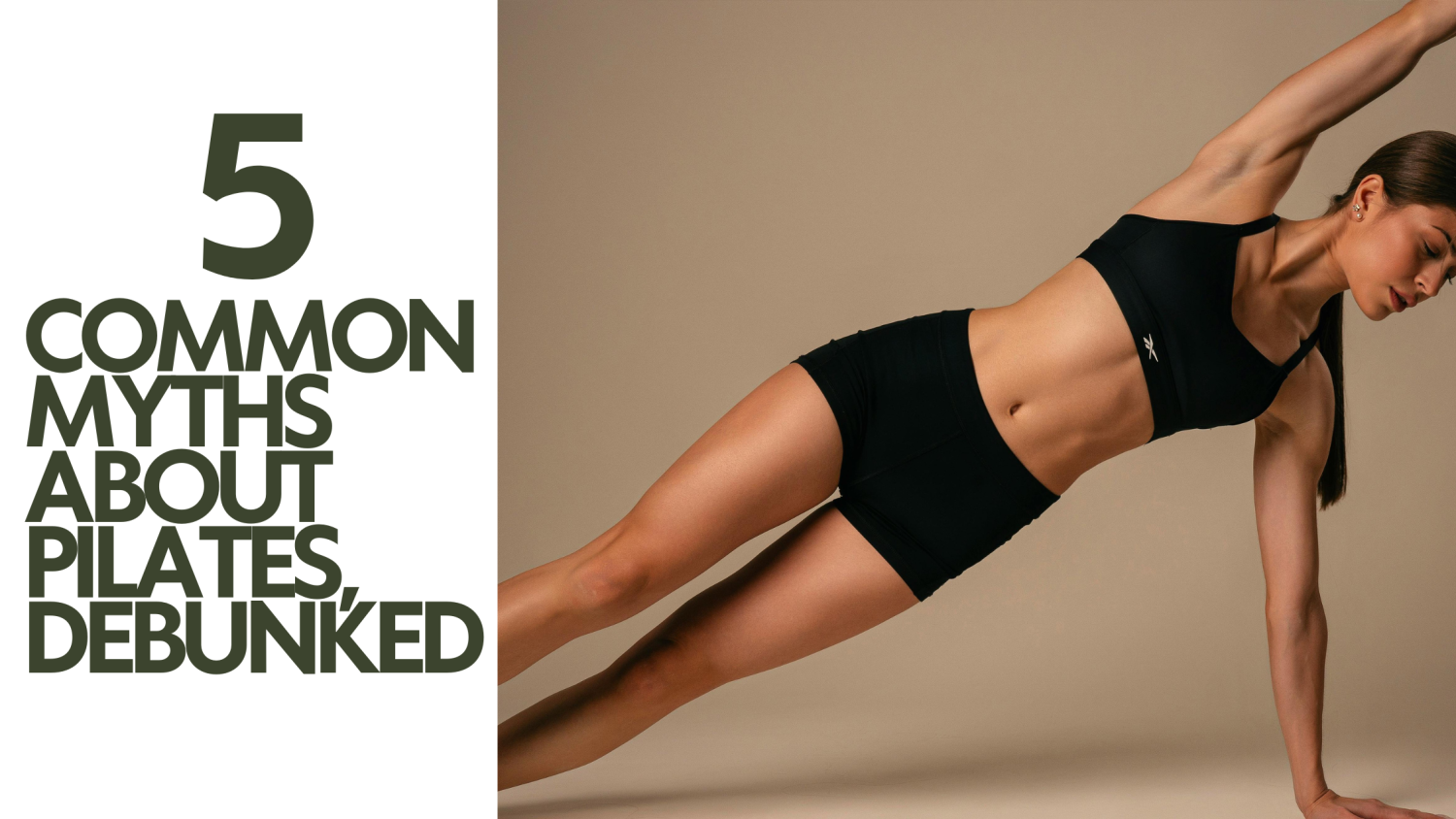
5 Common Myths About Pilates, Debunked

5 Common Myths About Pilates, Debunked

Pilates has become one of the fastest-growing forms of exercise, but it’s also one of the most misunderstood. Whether you’ve never taken a class or you’re simply curious about what Pilates has to offer, you’ve probably heard a few misconceptions along the way.

Let’s separate fact from fiction.

Is Pilates Only for Women?

This is one of the biggest myths surrounding Pilates.

Pilates was created by Joseph Pilates, who originally developed his method to improve strength, mobility, and overall physical conditioning. Today, Pilates is practiced by men and women of all ages, from professional athletes to weekend warriors and those simply looking to move and feel better.

The principles of Pilates benefit every body.

Is Pilates Actually a Good Workout?

Absolutely.

Because Pilates emphasizes slow, controlled movement, people often assume it isn’t challenging. In reality, the opposite is true.

Pilates develops muscular endurance, balance, stability, coordination, flexibility, and core strength. Many students leave Pilates class surprised by how much their muscles worked, even without lifting heavy weights or performing high-impact exercises.

Do You Have to Be Flexible to Do Pilates?

Not at all.

Many people begin Pilates classes because they aren’t flexible.

The beauty of Pilates is that it meets you where you are. As your strength, mobility, and body awareness improve over time, flexibility often improves naturally as well. You don’t need to be flexible to start. You simply need to be willing to begin.

Is Pilates Just Stretching?

Stretching is certainly part of Pilates, but it represents only a small piece of the practice.

Pilates combines strength, mobility, balance, breathing, posture, and precise movement into one complete workout. Rather than focusing on one area of fitness, Pilates trains your body to move more efficiently as a whole.

Is Pilates Only for Injury Recovery?

Pilates is frequently recommended during rehabilitation because exercises can be modified for many different abilities.

However, that’s only one side of the story.

Healthy adults, athletes, runners, cyclists, golfers, and fitness enthusiasts regularly practice Pilates to improve performance, prevent injuries, and build strength that carries over into everyday life and other forms of exercise.

Why Is Pilates So Popular?

The popularity of Pilates continues to grow because it offers something many workouts don’t.

Instead of focusing solely on burning calories or pushing harder, Pilates teaches you how to move better. Better posture, improved balance, greater body awareness, increased strength, and enhanced mobility are benefits that extend far beyond the studio.

Whether you’re new to exercise or looking to complement your current routine, Pilates is a practice that can support your body for years to come.

Is Pilates Good for Back Pain?

Is Pilates Good for Back Pain?

Back pain is one of the most common reasons people begin looking for a new form of exercise. Whether your discomfort comes from sitting at a desk all day, repetitive movements, poor posture, or general muscle weakness, you may be wondering if Pilates can help.

The good news is that Pilates is designed to improve the way your body moves. Rather than focusing on high-impact exercise or repetitive motions, Pilates emphasizes strength, stability, mobility, and control. For many people, these qualities can contribute to a healthier, more supported back.

Can Pilates Help Back Pain?

For many individuals, yes. Pilates focuses on strengthening the muscles that support your spine while improving balance, coordination, and body awareness. As these muscles become stronger and work together more efficiently, everyday movements like standing, bending, lifting, and walking often feel easier and more comfortable.

While Pilates isn’t a cure for every type of back pain, it can be an effective part of a long-term movement routine that supports spinal health.

Why Does Pilates Help Support a Healthy Back?

A strong back depends on more than just strong back muscles. Your hips, glutes, abdominal muscles, pelvic floor, and shoulders all contribute to the way your spine functions.

Pilates trains these muscle groups to work together instead of compensating for one another. The result is improved posture, better movement mechanics, and less unnecessary strain placed on the lower back during everyday activities.

Can Pilates Strengthen Your Core and Reduce Back Pain?

One of the biggest misconceptions is that your core consists only of your abdominal muscles. In Pilates, your core is viewed as the entire support system surrounding your trunk, including your deep abdominal muscles, back muscles, diaphragm, and pelvic floor.

Developing strength throughout this system creates greater stability for the spine. A stronger core can improve balance, posture, and movement efficiency, all of which may help reduce the stress that contributes to back discomfort.

Is Pilates Better Than Stretching for Back Pain?

Stretching certainly has its place, but flexibility alone doesn’t always solve the problem.

Pilates combines mobility with strength, helping your body move through a healthy range of motion while also building the stability needed to support those movements. Instead of simply increasing flexibility, Pilates teaches your body how to control movement safely and efficiently.

Who Should Try Pilates for Back Pain?

Pilates can be an excellent choice for beginners, active adults, older adults, and athletes alike because every exercise can be modified to meet your current ability.

If you’re experiencing persistent or severe back pain, it’s always wise to speak with your healthcare provider before beginning any new exercise program. Once you’re cleared for activity, a qualified Pilates instructor can help you build confidence while progressing at a pace that’s appropriate for you.

What Is the Best Pilates Class for Back Pain?

The best class is one that prioritizes proper form, thoughtful instruction, and gradual progression over intensity.

At Fever | Yoga Cycle Strength, our Pilates classes focus on controlled movement, proper alignment, and building strength from the inside out. Whether you’re completely new to Pilates or returning after time away, our instructors can help you develop a movement practice that supports your goals and helps you move with greater confidence.

The Bottom Line: Is Pilates Good for Back Pain?

For many people, Pilates offers far more than a workout. It builds strength, improves posture, increases mobility, and teaches your body to move more efficiently. Over time, those improvements can help support a healthier back and a stronger, more resilient body.

If you’ve been wondering whether Pilates is right for you, there’s no better time to discover how intentional movement can make a meaningful difference in the way you feel every day.

What to expect at your first pilates class

What to Expect at Your First Pilates Class

Walking Into the Pilates Room: What It Actually Feels Like

Your first Pilates class might feel a little uncertain at first, and that’s completely normal.

You’ll walk into a quieter, more focused environment than something like a high-energy cardio class. People are usually already set up on their mats, and there’s a sense of intention in the room.

It’s not chaotic. It’s not rushed.

It’s controlled, calm, and focused.

That shift alone can feel different if you’re used to faster-paced workouts.

The Pilates Setup: Simple, But Intentional

Most mat Pilates classes use a few small props. You might see:

•   light weights

•   resistance bands

•   rings

•   blocks

Nothing complicated, but everything has a purpose.

Your instructor will guide you through what you need and how to set it up. You’re not expected to know anything walking in.

The Pilates Pace: Slower Than You Expect

One of the biggest surprises for first-timers is the pace.

Pilates is not about rushing through movements. It’s about slowing them down and controlling them to build strength.

At first, it may feel like:

•   “Why is this so slow?”

•   “Am I doing this right?”

•   “Why is this harder than it looks?”

That’s the point.

Slowing down removes momentum and forces your muscles to actually do the work.

Why Pilates Looks Easy… But Isn’t

Pilates movements are often small and controlled, which can make them look simple from the outside.

But once you’re in it, you’ll quickly realize:

•   your core is working constantly

•   your muscles are shaking in ways you didn’t expect

•   your mind has to stay engaged the entire time

There’s no zoning out. The Pilates challenge is subtle strength, but it builds quickly.

Pilates vs Yoga: What’s the Difference

Pilates vs Yoga: What’s the Difference (and Which One Is Right for You?)

Two Practices, Often Confused

Pilates and yoga are often grouped together, but they come from completely different systems of thought and were designed with different intentions.

Yoga is an ancient practice rooted in philosophy, breath, and awareness. It’s not just movement. It’s a system for understanding the mind, the body, and your relationship to both.

Pilates, on the other hand, is a modern method developed by Joseph Pilates. It’s rooted in physical conditioning, with a strong emphasis on control, alignment, and strengthening the body from the inside out.

They may look similar on the surface, but what they are doing beneath that surface is very different.

The Origin: Ancient Practice vs Modern Method

Yoga has been around for thousands of years. Yoga is rooted in spiritual philosophy, with movement being just one piece of a much larger system that includes meditation, breathwork, and self-inquiry.

Pilates was developed in the early 20th century as a rehabilitation and strengthening system. It was designed to restore function, build core stability, and create a balanced, resilient body.

Yoga asks: How do I experience myself more fully?

Pilates asks: How do I move my body more efficiently and effectively?

The Goal: Awareness vs Control

Yoga prioritizes awareness. The shapes are important, but the internal experience matters more. You are paying attention to breath, sensation, and presence.

Pilates prioritizes control. Every movement has a specific intention. Precision matters. Alignment matters. The goal is to execute movements with stability and strength.

In yoga, you may explore the pose.

In Pilates, you refine the movement.

The Pace: Flow vs Precision

Yoga often includes flow-based movement, especially in vinyasa classes where poses are linked together with breath. There’s rhythm, continuity, and a sense of moving meditation.

Pilates is typically slower and more deliberate. Movements are broken down and repeated with control. There’s less momentum and more muscular demand in smaller ranges.

Yoga builds rhythm and flow.

Pilates builds control and endurance.

The Physical Focus: Flexibility vs Strength (with Overlap)

Yoga tends to emphasize flexibility, mobility, and lengthening through the body, while still building strength depending on the style.

Pilates is more targeted toward strength, especially deep core strength, posture, and muscular balance.

That said, both practices build both. The difference is in emphasis.

Yoga opens the body.

Pilates builds strength and organizes the body.

The Experience: Internal vs Technical

Yoga invites a more internal experience. You’re often guided to notice how you feel, observe your breath, and stay present in the moment.

Pilates feels more technical. You’re thinking about where your ribs are, how your pelvis is positioned, how your core is engaging.

Yoga is experiential.

Pilates is instructional.

The Role of Breath

Breath is central to both, but it’s used differently.

In yoga, breath is often used to guide movement and deepen awareness. It can be calming, energizing, or meditative.

In Pilates, breath is used to support the movement. It helps stabilize the core and create efficiency in how the body works.

Same tool, different purpose.

Which One Should You Choose?

It depends on what you’re looking for.

If you want to:

•   slow down

•   connect inward

•   improve flexibility and mobility

•   build a deeper awareness of your body and mind

Yoga may be the better fit.

If you want to:

•   build core strength

•   improve posture

•   move with more control and stability

•   feel physically stronger in a structured way

Pilates may be the better fit.

Do You Have to Choose Mat Pilates or Yoga?

Not at all.

These two practices complement each other exceptionally well. One builds awareness and openness. The other builds strength and structure.

Together, they create a more complete approach to movement.

Our Take: Why Both Matter

At the end of the day, it’s not about choosing one over the other. It’s about understanding what each offers and using them intentionally.

Yoga helps you understand your body.

Pilates helps you strengthen it.

When you combine both, you’re not just working out. You’re building something that lasts.


pilates in Grand Rapids

Pilates in Grand Rapids: Strength, Control, and Intentional Movement at Fever YCS

If you’re searching for Pilates in Grand Rapids or typing “Pilates near me” into Google, you’re likely looking for a workout that builds strength, improves posture, and supports your body long-term.

At Fever Yoga Cycle Strength, Pilates is taught as a mat-based, strength-focused practice rooted in control, precision, and intelligent movement. Our classes emphasize deep core engagement, proper alignment, and sustainable strength you can feel beyond the studio.

What Is Pilates?

Pilates is a low-impact strength method that focuses on:

• Core stability and control

• Breath-supported movement

• Postural alignment

• Balanced, full-body strength

• Mobility without excess strain

Pilates trains the muscles that support your spine, hips, and joints, making it one of the most effective ways to build strength while protecting your body.

Pilates in Grand Rapids at Fever YCS

Pilates at Fever is intentionally taught on the mat, allowing you to develop strength through your own bodyweight, props, gravity, and mindful resistance.

Our Pilates classes focus on slow, controlled movement, deep abdominal and postural engagement, and stability through the hips and shoulders. This approach builds strength that carries into daily life and complements the other modalities we offer.

Who Is Pilates For?

Pilates is ideal if you:

• Want to strengthen your core without high impact

• Prefer intentional, low-stress movement

• Want better posture and body awareness

• Cross-train with yoga, cycling, or strength training

• Are focused on longevity and joint health

Many people searching for Pilates near me choose Pilates because it supports long-term strength, mobility, and resilience.

Pilates, Yoga, Barre, and More: A Balanced Approach to Fitness

One of the advantages of practicing Pilates at Fever is that it doesn’t stand alone — it fits into a complete, balanced fitness system.

At Fever, we focus on the four pillars of fitness success:

• Flexibility – supported through yoga and mobility-based practices

• Cardio – built through cycling and conditioning formats

• Strength – developed through Pilates, barre, Infrared classes and strength training

• Recovery – integrated through restorative yoga, sound healing, breath, and mindful class design

Pilates plays a key role in building core strength, alignment, and stability, while yoga enhances flexibility and nervous system balance, barre adds muscular endurance, and cycle and strength classes build cardiovascular fitness and power.

The good news is you don’t have to choose just one — our class offerings are designed to work together, giving you a sustainable, well-rounded approach to fitness.

New to Pilates in Grand Rapids?

If you’re new to Pilates, our instructors guide you through proper alignment, clear movement cues, and thoughtful modifications. No prior experience is needed — just curiosity and a willingness to move with intention.

Located in downtown Grand Rapids, Fever offers Pilates alongside hot Pilates, barre, hot yoga, hot barre, cycle, and strength training in a grounded, welcoming environment.

If you’re searching for Pilates in Grand Rapids or Pilates near me, this is a place to build strength with purpose and longevity in mind.

Book your first class here: https://feverycs.com/schedule

Mat Pilates VS Reformer Pilates

Mat Pilates vs Reformer Pilates: What’s the Difference?

Pilates is often spoken about as one single practice, but there are two distinct approaches that shape the way people experience it: mat Pilates and reformer Pilates. Both are rooted in controlled movement, breath awareness, and deep core engagement, yet the way your body is challenged in each style is remarkably different. Understanding those differences can help you choose the practice that supports your goals instead of simply following trends.

What Is Mat Pilates?


Mat Pilates is performed entirely on the floor using your body weight as resistance. Without the assistance of springs or straps, your muscles are required to stabilize every movement on their own. This develops not just visible strength, but the deep stabilizing muscles that support posture, joint health, and long-term mobility. Over time, mat Pilates trains your nervous system to move with precision instead of momentum, which is why it often feels deceptively simple while being profoundly effective.

What Is Reformer Pilates?


Reformer Pilates uses a machine equipped with springs, a sliding carriage, straps, and pulleys to add external resistance to each movement. This creates a different sensory experience, where the equipment guides the range of motion and adds load to the muscles. Many people enjoy the feedback and variety the reformer provides, especially when working through injuries or building strength in very specific patterns.

Why Mat Pilates Builds Stronger Foundations


Because mat Pilates does not rely on large equipment, it teaches your body to generate stability from within. Every movement demands coordination between your breath, your core, and your limbs. This is what makes mat work such a powerful foundation for yoga, barre, and strength training. When you remove external support, your body has no choice but to develop integrity in the way it moves.

How the Two Styles Feel in the Body


Mat Pilates builds strength differently and tends to feel grounding, internally focused, and quietly challenging. You often finish feeling more connected to your posture, your breath, and your alignment. Reformer Pilates can feel more dynamic and muscular, with sensations that resemble resistance training. Both leave you stronger, but they do so through very different pathways.

Choosing the Right Practice for You


The best Pilates practice is not the one that looks the most impressive but the one that meets your body where it is today. Mat Pilates is ideal for anyone seeking long-term strength, improved mobility, and a deeper understanding of how their body moves. Reformer Pilates can be an excellent complement, especially for those who enjoy equipment-based training or are working through physical limitations. When you understand the role each style plays, Pilates becomes more than a workout — it becomes a system for building resilience from the inside out.

How is Hot Pilates Different From Mat Pilates

How Is Hot Pilates Different From Regular Pilates?

At first glance, hot Pilates and mat Pilates may look similar. The movements are controlled, intentional, and grounded in core strength. The difference isn’t in the exercises themselves — it’s in the environment that surrounds them.

Adding heat changes how the body experiences the work.

The Role of Heat in Movement

In a warm room, muscles tend to feel more receptive to movement. This doesn’t mean stretching deeper or forcing range of motion. It means sensation is amplified. You become more aware of where you’re gripping, where you’re avoiding effort, and where breath is getting shallow.

Heat doesn’t make the practice harder for the sake of difficulty — it makes the practice more honest.

How Intensity Is Experienced

Regular mat Pilates builds strength through precision and control. Hot Pilates keeps that same foundation, but the heat creates a different relationship to effort. The work feels immersive. Focus sharpens. Endurance builds in a quieter but more demanding way.

Rather than pushing for more repetitions, the challenge often comes from staying present when sensation increases.

Breath and Nervous System Response

One of the most noticeable differences in hot Pilates is how quickly breath becomes a guide. In the heat, shallow breathing is immediately noticeable. This encourages deeper, more rhythmic breathing patterns, which can help regulate the nervous system even while the body is working.

Many people leave hot Pilates feeling both physically tired and mentally clear — a contrast that isn’t always felt after non-heated workouts.

Why Some People Prefer Hot Pilates

Some are drawn to hot Pilates because it feels cleansing or grounding. Others appreciate that the warmth helps them settle into their body more quickly. The practice isn’t about burning calories or chasing intensity — it’s about using environment as a teacher.

Choosing What’s Right for You

Both regular Pilates and hot Pilates build strength, awareness, and control. The question isn’t which one is better, but which one supports what your body needs right now.

For some, the calm precision of mat Pilates is exactly right. For others, adding heat creates the kind of focus that turns movement into something more immersive.

The foundation is the same — the experience is not.

What is Mat Pilates

What Is Mat Pilates?

Mat Pilates is a form of movement that builds strength, stability, and body awareness using nothing more than your own bodyweight and intention. There are no machines, no heavy equipment, and no complicated choreography. Everything happens on the mat, which allows the practice to feel both simple and surprisingly deep.

Movement Rooted in Control

At its core, mat Pilates is about learning how to move with intelligence rather than force. The movements are controlled, precise, and often slower than people expect. Instead of pushing through exercises, you’re asked to stay connected to your breath, maintain awareness of alignment, and engage the muscles that support your spine and joints.

Strength Begins at the Center

One of the things that makes mat Pilates unique is its emphasis on the center of the body. The practice consistently works the deep abdominal muscles, the muscles around the pelvis and hips, and the stabilizers that support posture. Over time, this creates a feeling of strength that is less about bulk and more about integration — the body begins to move as a cohesive whole instead of in isolated parts.

Intentional Movement Over Momentum

Mat Pilates also places a strong focus on how movement originates. Rather than swinging limbs or relying on momentum, each exercise begins with intention. This helps improve coordination, balance, and overall body awareness. Many people notice that daily activities feel easier after developing this internal sense of control.

Accessible, Adaptable, and Deeply Effective

Because mat Pilates uses your own bodyweight, it is both accessible and challenging. Movements can be modified to meet you where you are, yet they can also become progressively more demanding as your strength and awareness increase. That adaptability is one of the reasons people of all experience levels continue to return to the practice.

Why Slow Pilates Movement Matters

Beyond physical strength, mat Pilates offers something quieter but just as important: a way to reconnect with the body. The steady pace and mindful nature of the movements create space to notice patterns of tension, imbalance, or disconnection. Over time, that awareness becomes a form of self-education — one that supports not only how you move, but how you inhabit your body.

Intensity Can Vary According to Style

For those who enjoy the precision of mat Pilates but crave more intensity, Hot Pilates offers a powerful progression. Practicing Pilates in a heated room adds an element of challenge that deepens focus, increases circulation, and invites an even stronger connection to breath and effort.

Strength From the Inside Out

Mat Pilates isn’t about chasing intensity. It’s about cultivating clarity, stability, and strength from the inside out.