Yoga is the foundation of our studio — a practice that builds strength, mobility, focus, and inner calm. This category brings together all of our yoga resources, from beginner guidance to breathwork, stretching, philosophy, and everyday application. Whether you’re exploring yoga for the first time or deepening an existing practice, these articles help you connect mind, body, and breath both on and off the mat.

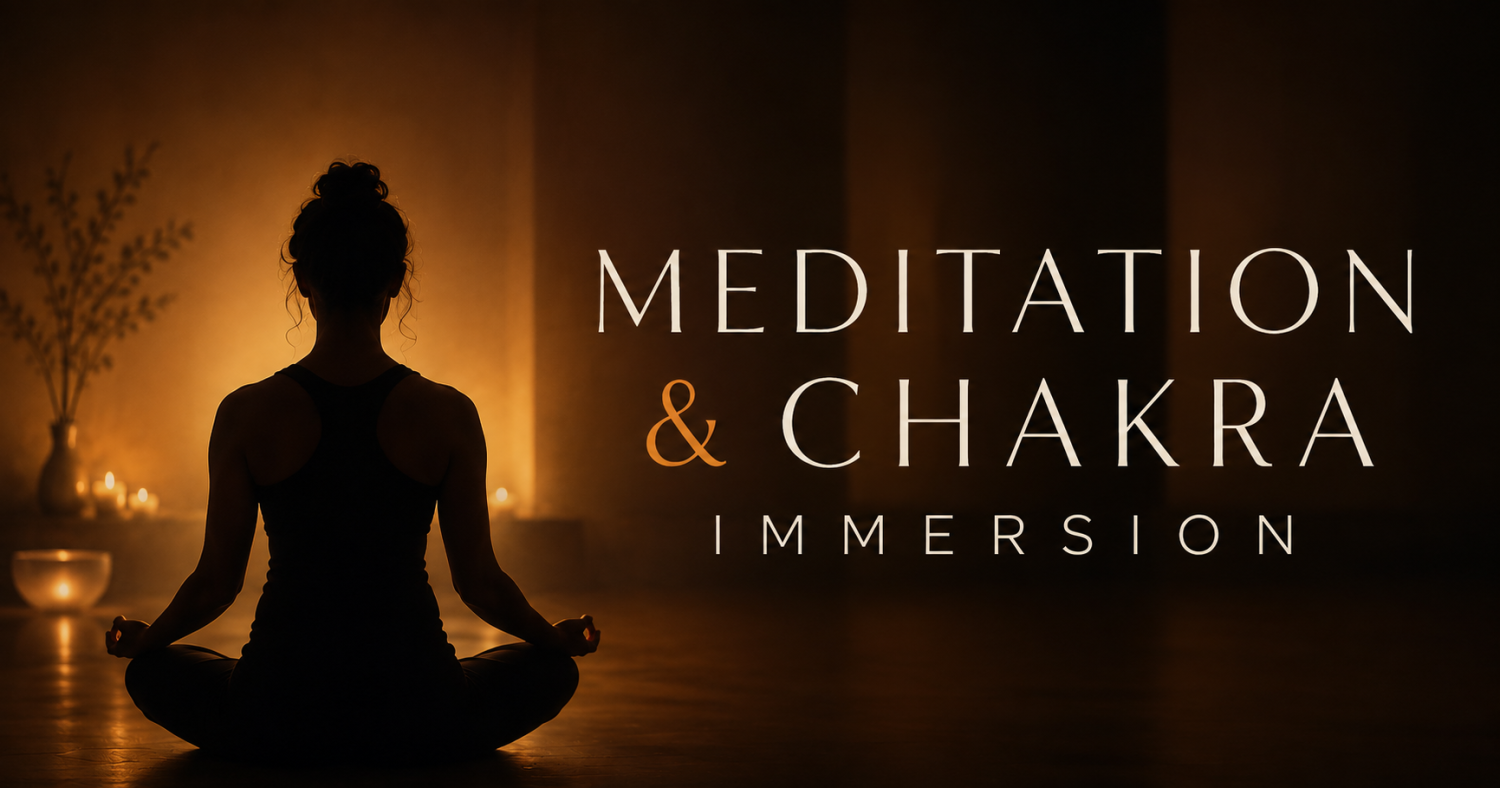
meditation and chakra immersion

Meditation & Chakra Immersion

An initiation into a meditation practice through four immersive sessions of guided meditation, breathwork, and brief teachings. Together, we’ll explore the chakra system through direct experience while cultivating a practice that extends far beyond taking the seat.

This immersion is designed for those who are ready to explore meditation beyond the introductory level. No previous meditation or chakra experience is required, only an open mind, a willingness to practice, and a desire to explore the deeper dimensions of Self.

Why Meditate?

Meditation is one of the most profound investments you can make in yourself. It teaches you how to quiet the constant noise of the mind, regulate the nervous system, cultivate greater clarity, and strengthen your connection to your deepest Self. From that place of inner stillness, we begin to create our lives with greater awareness, intention, and purpose.

This immersion is the first step toward developing a true meditation practice, one that becomes a lifelong resource for clarity, Self-discovery, and  transformation.

Immersion Details

Format: Four immersive, 3-hour sessions

Weekend 1:  Saturday, 2 – 5pm & Sunday, 2 – 5pm  

Weekend 2:  Saturday, 2 – 5pm & Sunday, 2 – 5pm 

Dates: Oct 3, 4  & Oct 10, 11

Investment: $399 (approximately $99 per session)

Class Size: Limited to 10 participants

Recovery Flow: Move Better, Feel Better, Recover Better

Recovery Flow: Move Better, Feel Better, Recover Better

Recovery isn’t about doing less. It’s about giving your body exactly what it needs so you can continue doing the things you love.

Whether you’re lifting weights, cycling, running, practicing hot yoga, or simply carrying the stress of everyday life, your body accumulates tension. Muscles tighten, joints lose mobility, and your nervous system can become overstimulated. Recovery Flow was created to help restore balance so you leave feeling refreshed, mobile, and ready for whatever comes next.

Recovery Flow is taught in an unheated room and blends the mindful pacing and props of classical hatha yoga with the breath-centered movement of vinyasa. You’ll continue to flow from posture to posture, but at a slower, more intentional pace that gives you time to refine your alignment, deepen your breath, and truly experience each movement.

Rather than rushing through transitions, you’ll spend a little more time in each yoga posture, allowing your muscles and connective tissue to gradually release while maintaining a steady rhythm throughout class. The result is a yoga practice that feels fluid, purposeful, and deeply restorative without ever feeling stagnant.

During class you can expect:

Gentle standing sequences that improve balance, mobility, and functional movement.
Breath-led flowing transitions between yoga postures.
Longer holds to improve flexibility and release accumulated tension.
Grounded movement that encourages healthy joint mobility.
Mindful breathing to calm the nervous system and reduce stress.
A few restorative postures at the end of class to leave you feeling refreshed and renewed.

Recovery Flow isn’t about pushing harder. It’s about moving with intention.

Many people think recovery means taking a day off. While rest certainly has its place, intentional movement is often one of the best ways to reduce soreness, improve circulation, maintain healthy joints, and support your body’s natural recovery process. Recovery Flow offers that opportunity through a thoughtful balance of movement, breath, mobility, and restoration.

This class is perfect if you:

Feel tight from strength training, cycling, or other workouts.
Practice hot yoga and want to balance intensity with recovery.
Spend long hours sitting at a desk.
Want to improve flexibility and mobility.
Enjoy flowing movement without the intensity of a faster-paced class.

Recovery is one of the four pillars of long-term health and fitness. By making space for it in your routine, you’ll not only feel better today, but you’ll also build a body that moves more efficiently and remains resilient for years to come.

Join us for Recovery Flow on Wednesday evening at 7:30PM and experience how slowing down, without stopping, can help you move better, recover more completely, and feel your best.

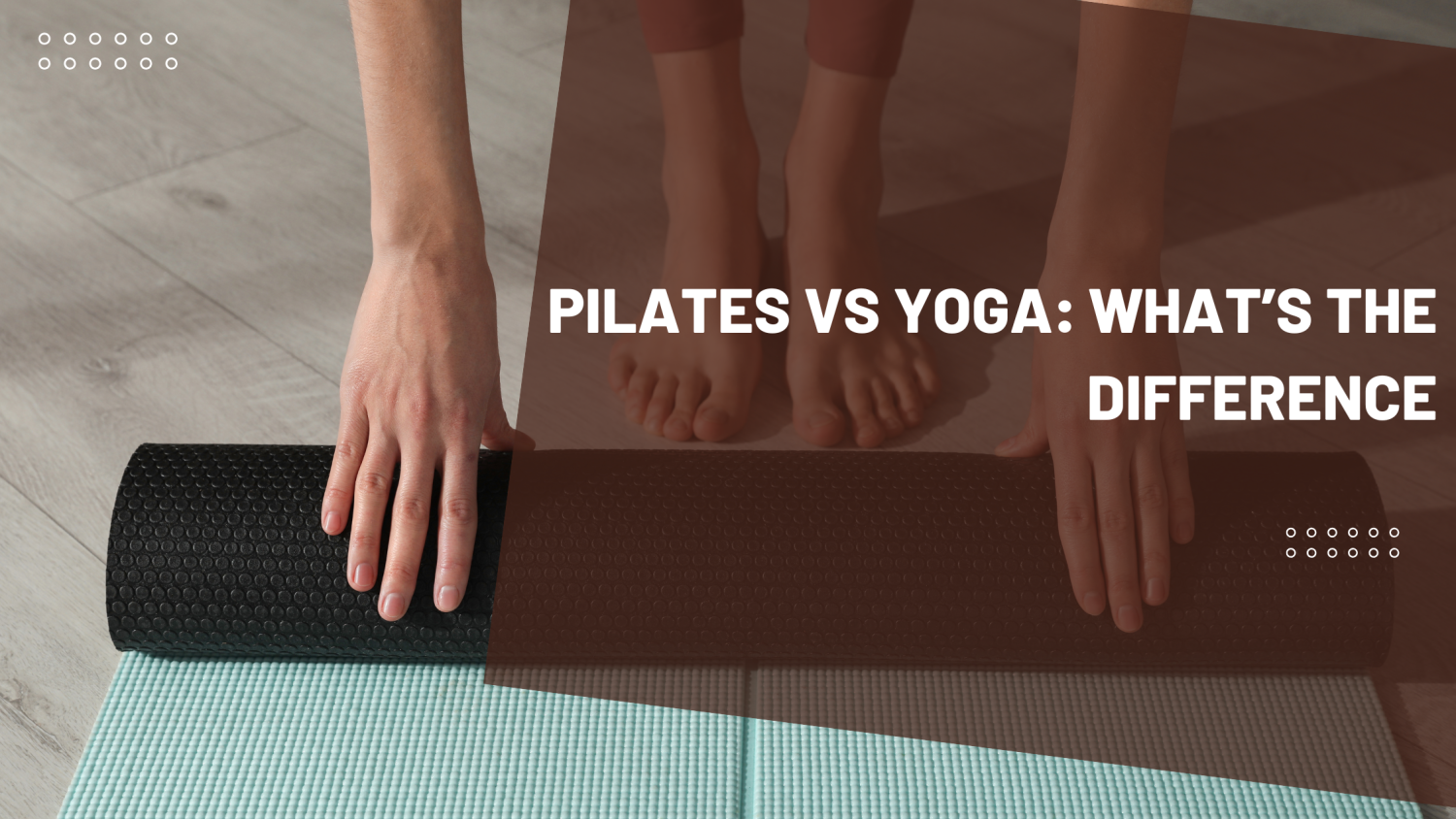
Pilates vs Yoga: What’s the Difference

Pilates vs Yoga: What’s the Difference (and Which One Is Right for You?)

Two Practices, Often Confused

Pilates and yoga are often grouped together, but they come from completely different systems of thought and were designed with different intentions.

Yoga is an ancient practice rooted in philosophy, breath, and awareness. It’s not just movement. It’s a system for understanding the mind, the body, and your relationship to both.

Pilates, on the other hand, is a modern method developed by Joseph Pilates. It’s rooted in physical conditioning, with a strong emphasis on control, alignment, and strengthening the body from the inside out.

They may look similar on the surface, but what they are doing beneath that surface is very different.

The Origin: Ancient Practice vs Modern Method

Yoga has been around for thousands of years. Yoga is rooted in spiritual philosophy, with movement being just one piece of a much larger system that includes meditation, breathwork, and self-inquiry.

Pilates was developed in the early 20th century as a rehabilitation and strengthening system. It was designed to restore function, build core stability, and create a balanced, resilient body.

Yoga asks: How do I experience myself more fully?

Pilates asks: How do I move my body more efficiently and effectively?

The Goal: Awareness vs Control

Yoga prioritizes awareness. The shapes are important, but the internal experience matters more. You are paying attention to breath, sensation, and presence.

Pilates prioritizes control. Every movement has a specific intention. Precision matters. Alignment matters. The goal is to execute movements with stability and strength.

In yoga, you may explore the pose.

In Pilates, you refine the movement.

The Pace: Flow vs Precision

Yoga often includes flow-based movement, especially in vinyasa classes where poses are linked together with breath. There’s rhythm, continuity, and a sense of moving meditation.

Pilates is typically slower and more deliberate. Movements are broken down and repeated with control. There’s less momentum and more muscular demand in smaller ranges.

Yoga builds rhythm and flow.

Pilates builds control and endurance.

The Physical Focus: Flexibility vs Strength (with Overlap)

Yoga tends to emphasize flexibility, mobility, and lengthening through the body, while still building strength depending on the style.

Pilates is more targeted toward strength, especially deep core strength, posture, and muscular balance.

That said, both practices build both. The difference is in emphasis.

Yoga opens the body.

Pilates builds strength and organizes the body.

The Experience: Internal vs Technical

Yoga invites a more internal experience. You’re often guided to notice how you feel, observe your breath, and stay present in the moment.

Pilates feels more technical. You’re thinking about where your ribs are, how your pelvis is positioned, how your core is engaging.

Yoga is experiential.

Pilates is instructional.

The Role of Breath

Breath is central to both, but it’s used differently.

In yoga, breath is often used to guide movement and deepen awareness. It can be calming, energizing, or meditative.

In Pilates, breath is used to support the movement. It helps stabilize the core and create efficiency in how the body works.

Same tool, different purpose.

Which One Should You Choose?

It depends on what you’re looking for.

If you want to:

•   slow down

•   connect inward

•   improve flexibility and mobility

•   build a deeper awareness of your body and mind

Yoga may be the better fit.

If you want to:

•   build core strength

•   improve posture

•   move with more control and stability

•   feel physically stronger in a structured way

Pilates may be the better fit.

Do You Have to Choose Mat Pilates or Yoga?

Not at all.

These two practices complement each other exceptionally well. One builds awareness and openness. The other builds strength and structure.

Together, they create a more complete approach to movement.

Our Take: Why Both Matter

At the end of the day, it’s not about choosing one over the other. It’s about understanding what each offers and using them intentionally.

Yoga helps you understand your body.

Pilates helps you strengthen it.

When you combine both, you’re not just working out. You’re building something that lasts.


ishvara pranidhana surrender and trust

 Ishvara Pranidhana (Surrender) and Trust

What Is Ishvara Pranidhana?

Ishvara Pranidhana is the practice of surrender. It is about releasing the need to control every outcome and trusting in something greater than your immediate understanding.

Ishvara Pranidhana in Daily Life

Life does not always unfold in predictable ways. Trying to control every detail can create stress and resistance. This principle invites you to shift from control to trust.

Ishvara Pranidhana as Expansion

When you release control, you move beyond what is known and predictable. This creates space for new possibilities to emerge. Surrender is not passive, it is an active trust in the process of change.

Practicing Ishvara Pranidhana Daily

Notice where you are trying to control outcomes. Experiment with letting go, even in small ways. Trust that not everything needs to be figured out in advance.

svadhyaya self study and awareness

Svadhyaya (Self-Study) and Awareness

What Is Svadhyaya?

Svadhyaya means self-study. It is the practice of observing your thoughts, behaviors, and patterns with awareness. It is not about judgment, but about understanding.

Svadhyaya in Daily Life

Much of what you do each day is automatic. Reactions, habits, and thought patterns often run without conscious awareness. Svadhyaya brings these patterns into focus so they can be seen clearly.

Svadhyaya as Observation

When you observe without immediately reacting, you create space. In that space, new choices become possible. Awareness interrupts repetition and opens the door to change.

Practicing Svadhyaya Daily

Pay attention to your thoughts and reactions throughout the day. Instead of labeling them as good or bad, simply notice them. This awareness is the first step toward transformation.

tapas discipline and change

 Tapas (Discipline) and Change

What Is Tapas?

Tapas is disciplined effort. It is the willingness to engage in practices that create growth, even when they are uncomfortable. It is often described as an internal fire that fuels transformation.

Tapas in Daily Life

Tapas shows up in consistency. It is the choice to follow through, to stay committed, and to take action even when motivation fluctuates. Without tapas, intentions often remain ideas rather than lived experiences.

 Tapas as Transformation

Change requires stepping beyond what is familiar. This can feel uncomfortable because it disrupts established patterns. Tapas is the willingness to stay with that discomfort long enough for something new to take shape.

Practicing Tapas Daily

Choose one small action that aligns with where you want to go and repeat it consistently. Over time, these actions build momentum and create lasting change for recovery.

santosha contentment and fulfillment

 Santosha (Contentment) and Fulfillment

What Is Santosha?

Santosha is the practice of contentment. It is the ability to feel a sense of enoughness without needing external circumstances to change. This does not mean a lack of ambition, but rather a grounded sense of fulfillment in the present moment.

Santosha in Modern Life

Many people are conditioned to believe that happiness comes from achieving the next goal. This creates a constant cycle of striving, where fulfillment is always in the future. Santosha interrupts that pattern by bringing your attention back to what is already here.

Santosha as a Chosen State

Contentment is not something that happens to you, it is something you generate. When you consciously create feelings of appreciation or gratitude, your internal state shifts. This changes how you experience your environment and how you move through your day.

Practicing Santosha Daily

Pause and recognize what is already working. This can be simple, your breath, your body, or your environment. Practicing contentment consistently creates a more stable and grounded internal state.

saucha purity and clarity

Saucha (Purity) and Clarity

What Is Saucha?

Saucha means purity or cleanliness, and it applies to both the external and internal environment. It includes your physical space, your body, and your thoughts. At its core, saucha is about creating conditions that support clarity and well-being.

Saucha in Daily Life

Your surroundings and inputs directly influence how you feel. Cluttered spaces, overstimulation, and constant noise can create internal overwhelm. On the other hand, simplicity and organization support a more grounded state. Saucha invites you to become aware of what you are taking in and how it affects you.

Saucha as Coherence

When your environment and mind are clear, your system functions more efficiently. There is less distraction, less friction, and more space for focus and presence. This clarity supports recovery, better decision-making and a greater sense of calm.

Practicing Saucha Daily

Start with one area, your space, your schedule, or your inputs. Simplify where you can. Remove what is unnecessary. These small actions create a ripple effect, leading to greater clarity and ease.

aparigraha non-grasping and letting go

 Aparigraha (Non-Grasping) and Letting Go

What Is Aparigraha?

Aparigraha is the practice of non-attachment. It is about releasing the need to hold onto things, whether physical objects, outcomes, identities, or expectations. It encourages a lighter way of moving through life, where you are not defined or weighed down by what you accumulate or cling to.

Aparigraha in Modern Life

It is easy to become attached to results, roles, and routines. You may find yourself holding tightly to how things should unfold or who you believe you are. This attachment creates pressure and resistance, especially when life shifts or changes. The tighter the grip, the more tension is created.

Aparigraha as Freedom

Letting go does not mean losing direction, it means releasing unnecessary control. When you are no longer gripping the known, you create space for something new to emerge. This openness allows for flexibility, creativity, and a different kind of growth that is not forced.

Practicing Aparigraha Daily

Notice where you are holding on tightly. This could be an expectation, a timeline, or even a self-image. Experiment with loosening your grip. Allow space in your schedule, your thoughts, and your plans. Over time, this creates a sense of ease and adaptability.

brahmacharya energy focus and direction

 Brahmacharya (Energy Direction) and Focus

What Is Brahmacharya?

Brahmacharya is often translated as moderation, but its deeper meaning is about the wise use of energy. It asks you to become aware of how your life force is being spent and whether it is being directed in a way that supports your growth. Rather than restriction, it is about refinement. It is the understanding that your energy is a resource, and how you use it shapes your experience.

Brahmacharya in Daily Life

In a world filled with constant stimulation, your attention is pulled in many directions. Social media, noise, multitasking, and overstimulation all fragment your energy. Over time, this creates a sense of depletion and lack of focus. Brahmacharya invites you to step back and evaluate what is actually worth your energy and what is simply habit or distraction.

Brahmacharya as Energy Management

Where your attention goes, your energy follows. When your attention is scattered, your results often feel inconsistent or diluted. When your attention is focused, your energy becomes more powerful and effective. This principle highlights the connection between awareness and outcome. It is not about doing more, but about directing your energy with intention.

Practicing Brahmacharya Daily

To practice Brahmacharya begin by simplifying. Reduce unnecessary inputs and distractions where possible. Notice what leaves you feeling drained versus what leaves you feeling clear. Start making small shifts toward what supports your energy rather than depletes it. Over time, your focus strengthens and your capacity increases.