
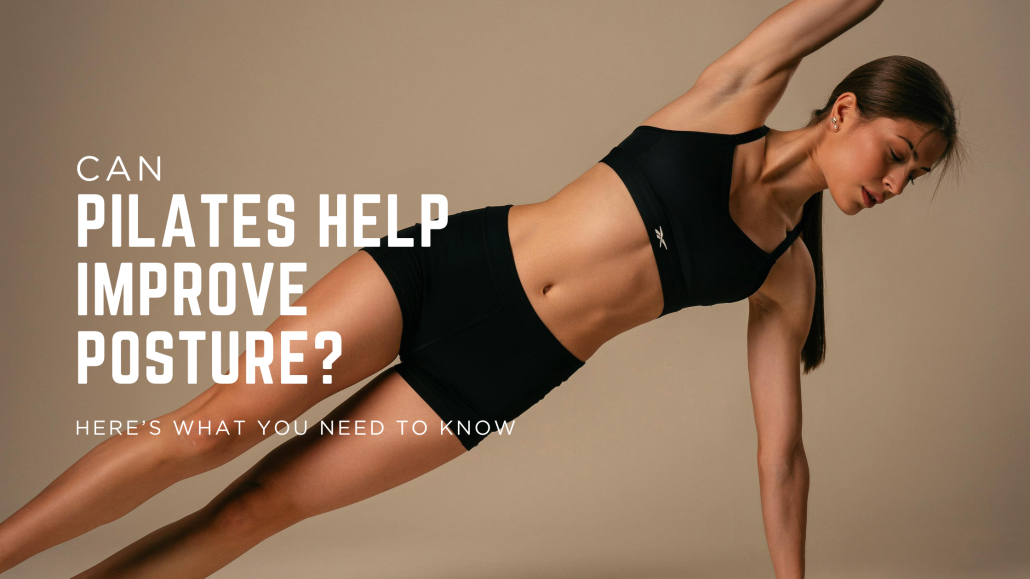
Can Pilates Help Improve Posture? Here’s What You Should Know
Good posture isn’t about forcing yourself to stand up straight or constantly reminding yourself to pull your shoulders back. In fact, trying to “sit up straight” often creates more tension than it solves.
True posture begins with strength, balance, and body awareness within the Pilates framework.
That’s one of the reasons Pilates has become one of the most recommended forms of exercise for improving posture. Rather than focusing on appearance alone, Pilates helps your body develop the strength and coordination needed to support itself naturally.
Over time, many people notice they’re standing taller, moving more comfortably, and experiencing less tension throughout the neck, shoulders, and lower back.
Can Pilates Really Improve Your Posture?
Yes.
Pilates was designed to help the body move more efficiently, and posture is a natural part of that process.
Every exercise encourages awareness of spinal alignment while strengthening the muscles responsible for supporting your body. Instead of relying on one muscle group to do all the work, Pilates teaches your entire body to share the load.
As those movement patterns become stronger, good posture often becomes something you do automatically instead of something you constantly think about.
That’s one of the biggest differences between Pilates and simply reminding yourself to stand taller.
Why Does Poor Posture Develop?
Poor posture usually isn’t caused by one single habit.
It’s often the result of spending long periods sitting, looking down at phones, working at computers, driving, carrying bags on one shoulder, or repeating the same movement patterns day after day.
Over time, certain muscles become overworked while others become weaker.
The body naturally finds the easiest way to accomplish a task, even if that movement isn’t the most efficient.
Pilates helps restore balance by strengthening underused muscles while improving mobility in areas that have become stiff or restricted.
How Does Pilates Strengthen the Muscles That Support Good Posture?
One of the reasons Pilates is so effective is because it focuses on your entire support system, not just your back.
During class, you’ll strengthen the deep abdominal muscles, upper back, shoulders, hips, glutes, and the muscles surrounding your spine.
These muscles work together to stabilize your body every time you sit, stand, walk, lift, or reach overhead.
As these muscles become stronger, maintaining good posture requires less effort because your body has developed the support it needs.
Can Pilates Help Relieve Neck and Shoulder Tension?
For many people, yes.
Neck and shoulder tension is often connected to the way we carry ourselves throughout the day.
When the shoulders round forward or the head drifts in front of the body, the muscles of the neck and upper back must work harder simply to hold your head upright.
Considering that the average adult head weighs around 10 to 12 pounds, even small changes in alignment can place significant additional stress on these muscles.
Pilates encourages better alignment while strengthening the muscles that support the head, neck, and shoulders. As posture improves, many people notice they carry less unnecessary tension throughout the day.
Is Core Strength the Secret to Better Posture?
Core strength plays an important role, but it’s only one piece of the puzzle.
Many people associate the core with abdominal muscles alone.
In Pilates, the core includes the deep muscles of the abdomen, the muscles surrounding the spine, the diaphragm, pelvic floor, and other stabilizing muscles that work together to support your trunk.
When these muscles function efficiently, your body has a stable foundation from which everything else can move.
That’s why Pilates emphasizes quality of movement rather than isolated abdominal exercises.
How Long Does It Take to Notice Better Posture?
Every person is different, but many students begin noticing subtle changes within just a few weeks of consistent Pilates practice.
You may catch yourself sitting taller at work without thinking about it.
You might notice that walking feels easier, your shoulders feel more relaxed, or you’re no longer shifting your weight to one side while standing.
These small improvements often happen before visible changes in strength or muscle definition.
Over time, those everyday habits begin adding up to meaningful, lasting improvements.
Can Pilates Improve More Than Just the Way You Stand?
Absolutely.
Better posture often leads to better Pilates movement.
As your alignment improves in the Pilates class, everyday activities may feel more comfortable. Walking, climbing stairs, lifting groceries, exercising, and even sitting at your desk often become easier because your body is working more efficiently.
Many students also report feeling more confident after Pilates class.
Standing taller doesn’t just change how your body functions. It can influence how you feel, how you breathe, and even how you carry yourself in daily life.
Why Good Posture Is About More Than Looking Taller
It’s easy to think of posture as simply standing straighter, but the benefits extend far beyond appearance.
Good posture allows your joints to move more efficiently, your muscles to work more evenly, and your body to distribute force the way it was designed to.
Rather than fighting against gravity, your body begins working with it.
That’s one of the reasons Pilates has remained popular for nearly a century. It isn’t about achieving perfect posture. It’s about creating a body that’s balanced, strong, and capable of moving well throughout every stage of life.
The goal isn’t to force yourself into better posture.
The goal is to build a body that naturally supports it.

