
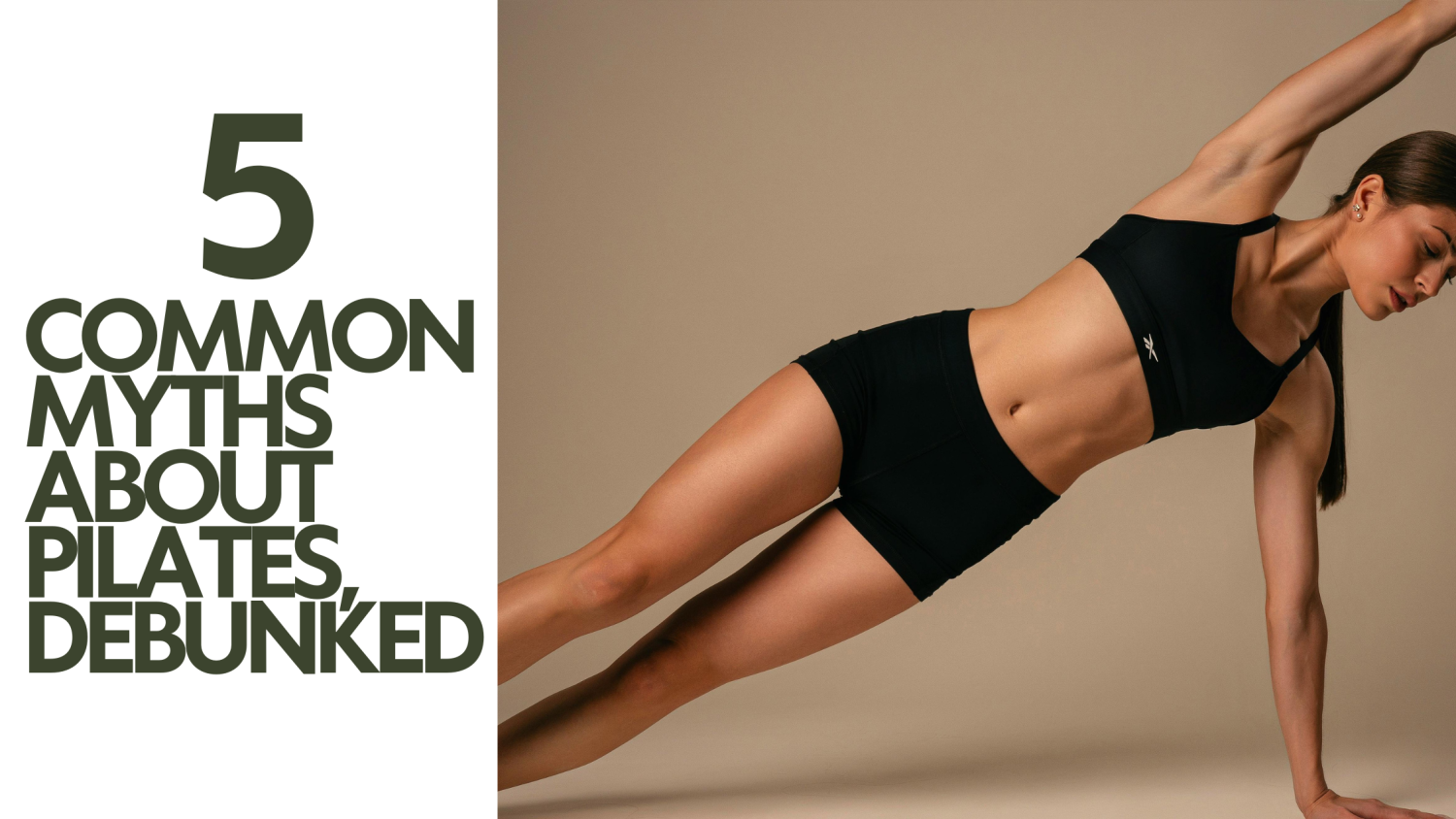
5 Common Myths About Pilates, Debunked
Pilates has become one of the fastest-growing forms of exercise, but it’s also one of the most misunderstood. Whether you’ve never taken a class or you’re simply curious about what Pilates has to offer, you’ve probably heard a few misconceptions along the way.
Let’s separate fact from fiction.
Is Pilates Only for Women?
This is one of the biggest myths surrounding Pilates.
Pilates was created by Joseph Pilates, who originally developed his method to improve strength, mobility, and overall physical conditioning. Today, Pilates is practiced by men and women of all ages, from professional athletes to weekend warriors and those simply looking to move and feel better.
The principles of Pilates benefit every body.
Is Pilates Actually a Good Workout?
Absolutely.
Because Pilates emphasizes slow, controlled movement, people often assume it isn’t challenging. In reality, the opposite is true.
Pilates develops muscular endurance, balance, stability, coordination, flexibility, and core strength. Many students leave Pilates class surprised by how much their muscles worked, even without lifting heavy weights or performing high-impact exercises.
Do You Have to Be Flexible to Do Pilates?
Not at all.
Many people begin Pilates classes because they aren’t flexible.
The beauty of Pilates is that it meets you where you are. As your strength, mobility, and body awareness improve over time, flexibility often improves naturally as well. You don’t need to be flexible to start. You simply need to be willing to begin.
Is Pilates Just Stretching?
Stretching is certainly part of Pilates, but it represents only a small piece of the practice.
Pilates combines strength, mobility, balance, breathing, posture, and precise movement into one complete workout. Rather than focusing on one area of fitness, Pilates trains your body to move more efficiently as a whole.
Is Pilates Only for Injury Recovery?
Pilates is frequently recommended during rehabilitation because exercises can be modified for many different abilities.
However, that’s only one side of the story.
Healthy adults, athletes, runners, cyclists, golfers, and fitness enthusiasts regularly practice Pilates to improve performance, prevent injuries, and build strength that carries over into everyday life and other forms of exercise.
Why Is Pilates So Popular?
The popularity of Pilates continues to grow because it offers something many workouts don’t.
Instead of focusing solely on burning calories or pushing harder, Pilates teaches you how to move better. Better posture, improved balance, greater body awareness, increased strength, and enhanced mobility are benefits that extend far beyond the studio.
Whether you’re new to exercise or looking to complement your current routine, Pilates is a practice that can support your body for years to come.

