
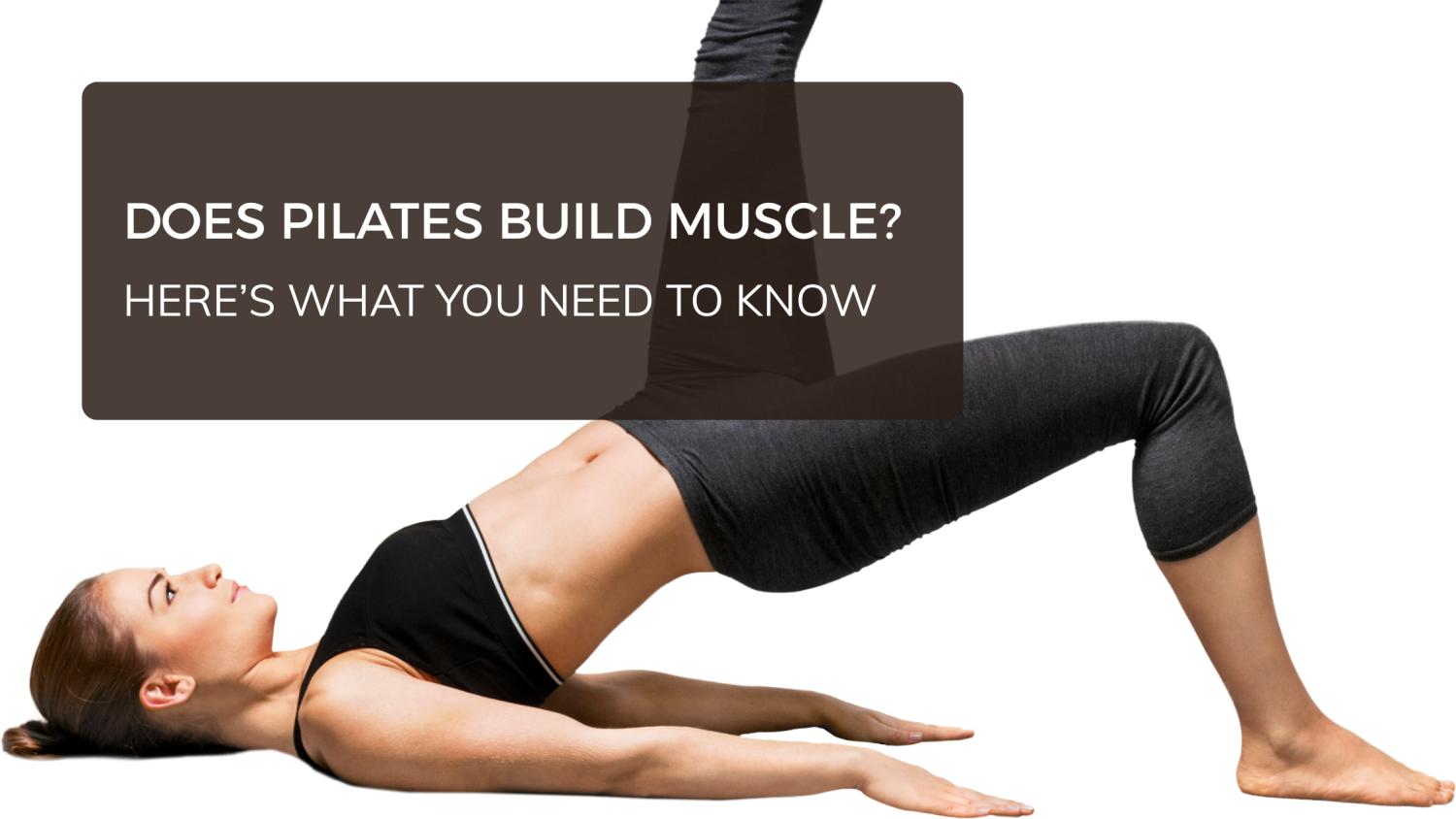
Does Pilates Build Muscle? Here’s What You Need to Know
One of the most common questions people ask before trying Pilates is whether it can actually build muscle.
If your image of building muscle involves lifting heavy weights at the gym, you might assume the answer is no. After all, Pilates relies on slow, controlled movements rather than barbells and dumbbells.
The reality is much more interesting.
Yes, Pilates can build muscle. It simply builds it differently than traditional strength training.
Rather than focusing on lifting the heaviest weight possible, Pilates emphasizes muscular control, endurance, stability, and precision. The result is a strong, balanced body that moves efficiently and feels capable in everyday life.
Can Pilates Really Build Muscle?
Absolutely.
Every Pilates exercise asks your muscles to remain engaged throughout the entire movement. Instead of using momentum, you’re constantly working against gravity while maintaining proper alignment.
Those sustained muscle contractions create strength over time.
While Pilates may not produce the same muscle size as a heavy bodybuilding program, it develops lean, functional muscle that supports posture, balance, and overall movement quality.
Many students are surprised by how challenging Pilates feels because the muscles remain under tension for longer periods than they expect.
What Kind of Muscle Does Pilates Build?
Pilates primarily develops muscular endurance and functional strength.
That means your muscles become better at working for longer periods while maintaining proper form and control.
Rather than training isolated muscles one at a time, Pilates teaches multiple muscle groups to work together. Your core, glutes, shoulders, hips, back, and legs are constantly communicating to stabilize your body throughout each exercise.
This creates balanced strength instead of simply stronger individual muscles.
It’s one of the reasons Pilates often improves the way people move long before they notice physical changes in the mirror.
Does Pilates Create Lean Muscle?
One phrase often associated with Pilates is “long, lean muscles.”
While exercise doesn’t actually change the length of your muscles, Pilates can absolutely help create the appearance of a leaner, more balanced physique.
Because Pilates combines strength with mobility and posture, many people begin standing taller, moving with greater confidence, and carrying themselves differently.
As muscles become stronger and body alignment improves, the overall appearance of the body often changes as well.
Many students notice improved muscle definition in their arms, legs, glutes, and core after practicing consistently for several months.
Is Pilates Enough to Build Strength?
For many people, yes.
If your goal is improving everyday strength, posture, balance, and overall fitness, Pilates can absolutely be an effective primary workout.
However, your goals matter.
If you’re strength training specifically to maximize muscle size or significantly increase maximal strength, traditional resistance training with progressively heavier loads may also have a place in your routine.
The good news is that these approaches work exceptionally well together.
Many people combine Pilates with strength training because each fills a different role. Weight training develops maximum force, while Pilates improves movement quality, stability, mobility, and muscular control.
Together, they create a well-rounded fitness program.
What Muscles Does Pilates Strengthen?
One of the reasons Pilates is so effective is because it rarely focuses on just one muscle at a time.
Instead, each exercise recruits multiple muscle groups simultaneously.
Throughout a typical class, you’ll strengthen your:
Deep abdominal muscles
Obliques
Lower back
Glutes
Hip stabilizers
Quadriceps
Hamstrings
Inner thighs
Shoulders
Upper back
Chest
Because these muscles work together throughout every movement, Pilates develops coordination alongside strength.
That’s one reason many students notice improvements in everyday activities like climbing stairs, carrying groceries, lifting luggage, or simply maintaining better posture throughout the day.
How Long Does It Take to Build Muscle with Pilates?
Like every form of exercise, consistency is the key.
Many people begin feeling stronger within just a few weeks.
Visible muscle definition often takes longer, depending on factors like nutrition, sleep, genetics, activity level, and how frequently you practice Pilates.
The important thing to remember is that progress isn’t always measured by appearance.
Long before muscles become more defined, you’ll likely notice better posture, improved balance, increased control, and greater confidence in your movement.
Those improvements often become the foundation for long-term physical health.
Why Does Pilates Feel So Challenging?
One reason Pilates surprises so many first-time students is because it removes momentum from the equation.
Moving slowly with precision requires constant muscular engagement.
Instead of rushing through repetitions, you’re asked to control every inch of the movement while maintaining proper breathing and alignment.
That combination challenges muscles in a completely different way than many traditional workouts.
It’s not uncommon for someone who regularly lifts weights or runs long distances to discover that Pilates exposes weaknesses they never realized they had.
That’s because Pilates isn’t simply asking your muscles to produce force.
It’s asking them to produce control.
Can Pilates Help You Build a Stronger Body?
Without question.
Pilates develops strength that’s designed to support your entire life, not just your workout.
You’ll build stronger muscles, better posture, improved balance, greater stability, and increased body awareness. Over time, those improvements make everyday movement feel easier while reducing unnecessary strain on your joints.
Whether Pilates becomes your primary workout or complements other forms of exercise, it offers something that’s often missing from traditional fitness programs: the ability to move with both strength and control.
In the end, building muscle isn’t just about how much weight you can lift. It’s about creating a body that’s resilient, balanced, and capable of supporting you through every stage of life.

