Indoor cycling in Grand Rapids at Fever is an immersive, rhythm-driven experience designed to elevate your strength, speed, and endurance. Our signature 30 minute rides blend powerful playlists, expert coaching, and intentional programming to deliver a full-body workout that’s energetic, efficient, and accessible for every level.

Indoor Cycling in Grand Rapids

Indoor Cycling in Grand Rapids

Looking for indoor cycling in Grand Rapids? Fever YCS offers high-energy indoor cycling classes in Grand Rapids that combine cardio, strength, resistance, rhythm, and music in one powerful workout.

Whether you’re an experienced rider or searching for your first spin class in Grand Rapids, our cycling classes are designed to meet you where you are. You’ll ride through climbs, sprints, resistance, endurance work, and recovery while controlling the intensity of your own bike.

If you’ve been searching for cycling classes in Grand Rapids, Fever gives you a place to ride, train, and become part of a larger fitness community right here in Grand Rapids, Michigan.

Indoor Cycling Classes in Grand Rapids at Fever

Our Grand Rapids indoor cycling classes combine intentional coaching, cardiovascular training, strength, and music-driven movement.

Throughout your ride, your instructor may guide you through:

  • Climbs and resistance work
  • Sprints and speed intervals
  • Cardiovascular endurance
  • Recovery periods
  • Core engagement
  • Upper-body strength work

Every indoor cycling class is different, but the goal is consistent: create an effective workout that builds cardiovascular fitness, muscular endurance, and strength.

And because you control the resistance on your bike, you control the intensity of your workout.

That’s what makes our indoor cycling classes in Grand Rapids accessible to newer riders while still giving experienced cyclists room to push.

30-Minute and 45-Minute Rides

Looking for a cycling workout that actually fits into your schedule?

Fever offers both 30-minute and 45-minute cycling classes in Grand Rapids, giving you options depending on your schedule, experience, and training goals.

Our 30-minute rides pack cardio, resistance, intervals, and strength into an efficient workout. They’re ideal when you want to get in, work hard, and get on with your day.

Our 45-minute indoor cycling classes give you additional time to build endurance, explore longer intervals, work through sustained climbs, and settle into the rhythm of the ride.

Whichever format you choose, you’ll get intentional coaching and a complete workout.

New to Indoor Cycling in Grand Rapids?

Never taken an indoor cycling class?

You’re welcome here.

Many people searching for indoor cycling in Grand Rapids or spin classes near me are looking for their very first ride. You don’t need previous cycling experience to get started at Fever.

Before class, we’ll help you adjust your bike and get comfortable with positioning and resistance. Once the ride begins, your instructor provides the direction while you remain completely in control of your intensity.

There is no requirement to match another rider’s speed or resistance.

Your first cycling class doesn’t need to be your hardest ride. It simply needs to be your first.

Why Choose Indoor Cycling for Cardio?

Indoor cycling provides a challenging cardiovascular workout without the repetitive impact associated with many other forms of cardio.

Regular cycling can help develop cardiovascular endurance, muscular stamina, and lower-body strength while challenging the legs, hips, and core.

Resistance and climbing add another dimension to the workout. Combined with intervals, speed work, core engagement, and upper-body strength, indoor cycling becomes an efficient way to train both cardiovascular fitness and muscular endurance.

That’s also why our spin classes work so well alongside yoga, Pilates, barre, and strength training.

You can ride one day and change the way you move the next.

Music-Driven Spin Classes in Grand Rapids

If you’re specifically searching for a calorie burning fitness modality, you’re probably looking for more than sitting on a stationary bike and pedaling.

Music is a major part of the cycling experience at Fever.

Our instructors use thoughtfully selected playlists to help shape the energy and progression of the ride through climbs, pushes, intervals, recovery, and strength work.

There’s something completely different about riding in a room with the music going, the lights low, and everyone immersed in the experience.

It’s physical. It’s focused. And sometimes it becomes surprisingly meditative.

Indoor Cycling in Grand Rapids

Fever YCS is located on Wealthy St in Grand Rapids, MI, making our studio a convenient option for people looking for indoor cycling and group fitness in the West Michigan area.

And unlike a cycling-only studio, your workout options don’t stop when you get off the bike.

Fever brings together indoor cycling in Grand Rapids with yoga, Pilates, barre, and strength training so you can create a varied fitness routine in one studio.

You don’t have to choose one way to move.

Find Your Next Indoor Cycling Class in Grand Rapids

Ready to ride?

If you’re looking for a cycle class like no other,  come experience a ride at Fever YCS.

Choose your class, reserve your bike, and discover another way to move in Grand Rapids, Michigan.

View the schedule and book your next indoor cycling class in Grand Rapids.
why a 45 minute spin class feels different than an hour at the gym

Why a 45-Minute Spin Class Feels Different Than an Hour at the Gym

Walk into a great spin class and you immediately feel the difference.

The lights dim. The music builds. The room begins moving together instead of separately. Within minutes, your focus sharpens and your body shifts into a completely different experience than wandering between machines at a traditional gym.

And while a 45-minute spin class may look shorter on paper, many people leave feeling more energized, more accomplished, and more mentally clear than they do after spending twice as long working out on their own.

There’s a reason for that.

At its best, indoor cycling is not just cardio. It is structured, rhythm-based performance training that combines endurance, focus, music, athleticism, and nervous system engagement into one immersive experience.

More Focus, Less Wandering

One of the biggest differences between a spin class and a traditional gym workout is mental engagement.

In many gym environments, workouts become fragmented. People walk from machine to machine, check their phones between sets, lose momentum, or spend large portions of their workout deciding what to do next.

Indoor cycling removes that mental clutter.

The structure is already built for you. The timing, intervals, climbs, sprints, recoveries, and pacing are intentionally programmed to create progression throughout the ride. Instead of thinking about what comes next, you are fully inside the workout itself.

That level of focus changes everything.

Many riders describe spin classes as feeling almost meditative at times. The outside world quiets down for 45 minutes because your attention becomes completely absorbed in breath, rhythm, movement, and effort.

Rhythm Changes Everything

Music is one of the most underrated performance tools in fitness.

A well-designed spin class uses rhythm intentionally. The beat helps regulate pace, increases motivation, and creates synchronization between the mind and body. Instead of exercising against resistance alone, riders begin moving with momentum and timing.

That connection often makes cardio feel more immersive and emotionally engaging.

Research continues to show that music can positively influence endurance, perceived exertion, mood, and workout consistency. But beyond science, there is also something deeply human about moving collectively to rhythm.

A powerful song at the right moment can completely shift energy in the room.

This is one reason spin classes often feel emotionally different than traditional cardio workouts. People are not simply burning calories. They are releasing stress, reconnecting with energy, and stepping outside of the mental fatigue many carry throughout the day.

Low Impact Does Not Mean Low Intensity

Many people assume that low-impact workouts are easier workouts.

That is not necessarily true.

Indoor cycling delivers challenging cardiovascular training while being significantly easier on the joints than many forms of high-impact exercise. Because the bike supports the body, riders can push intensity without the repeated pounding that often comes from running or jumping-based workouts.

For adults navigating joint stiffness, previous injuries, recovery periods, or simply the realities of aging, this becomes incredibly valuable.

A properly designed spin class can improve cardiovascular endurance, muscular stamina, leg strength, and overall conditioning while reducing unnecessary impact on the knees, hips, and ankles.

This is one reason indoor cycling continues to attract such a wide range of people, from beginners starting their fitness journey to experienced athletes looking for smarter conditioning options.

Shorter Workouts, Higher Output

Longer workouts do not automatically mean better workouts.

In fact, many people are now shifting away from the idea that fitness requires endless hours in the gym. More intentional programming often produces better results than simply staying active for longer periods of time.

A focused 45-minute spin class creates sustained effort with very little downtime. Riders spend more time actually working and less time transitioning between exercises or losing momentum.

The result is often a workout that feels efficient, athletic, and complete.

For busy adults balancing careers, parenting, responsibilities, and mental exhaustion, efficiency matters. Knowing you can walk into a class, fully immerse yourself for 45 minutes, and leave feeling physically and mentally reset is part of what makes spin classes so effective long term.

Why Group Energy Changes Performance

There is also a psychological component to group fitness that is difficult to replicate alone.

Energy is contagious.

When a room full of people begins climbing together, sprinting together, breathing together, and pushing through challenge together, it naturally elevates individual performance. People often work harder in a group setting without even realizing it because momentum becomes shared.

That does not mean spin classes are about competition.

The best indoor cycling environments create collective energy without pressure. Riders can modify resistance, pacing, and intensity while still feeling connected to the experience of the room.

This balance between individual freedom and shared momentum is part of what keeps people coming back.

Cardio That Feels Immersive Instead of Draining

One of the most common things people say after taking a great spin class is, “That went by so fast.”

That feeling matters.

Traditional cardio can sometimes feel repetitive or disconnected. Spin classes tend to create immersion. The changing terrain of the ride, the coaching, the music, the lighting, and the rhythm all work together to keep the brain engaged alongside the body.

Instead of staring at a clock while waiting for cardio to end, riders become absorbed in the experience itself.

And often, they leave not feeling depleted, but energized.

The Future of Cardio Is Smarter, Not Harder

The fitness world continues evolving away from punishment-based exercise and toward more intentional, sustainable training.

People want workouts that feel effective without destroying their bodies. They want movement that supports mental health alongside physical health. They want challenge without burnout.

That is exactly why spin classes and indoor cycling continue to grow.

At Fever, our cycling classes are designed to deliver athletic, rhythm-based cardio training in an energizing environment that supports both performance and longevity. Whether you are brand new to spin or returning to cardio after years away, indoor cycling offers a powerful way to build endurance, confidence, and consistency without spending endless hours in the gym.

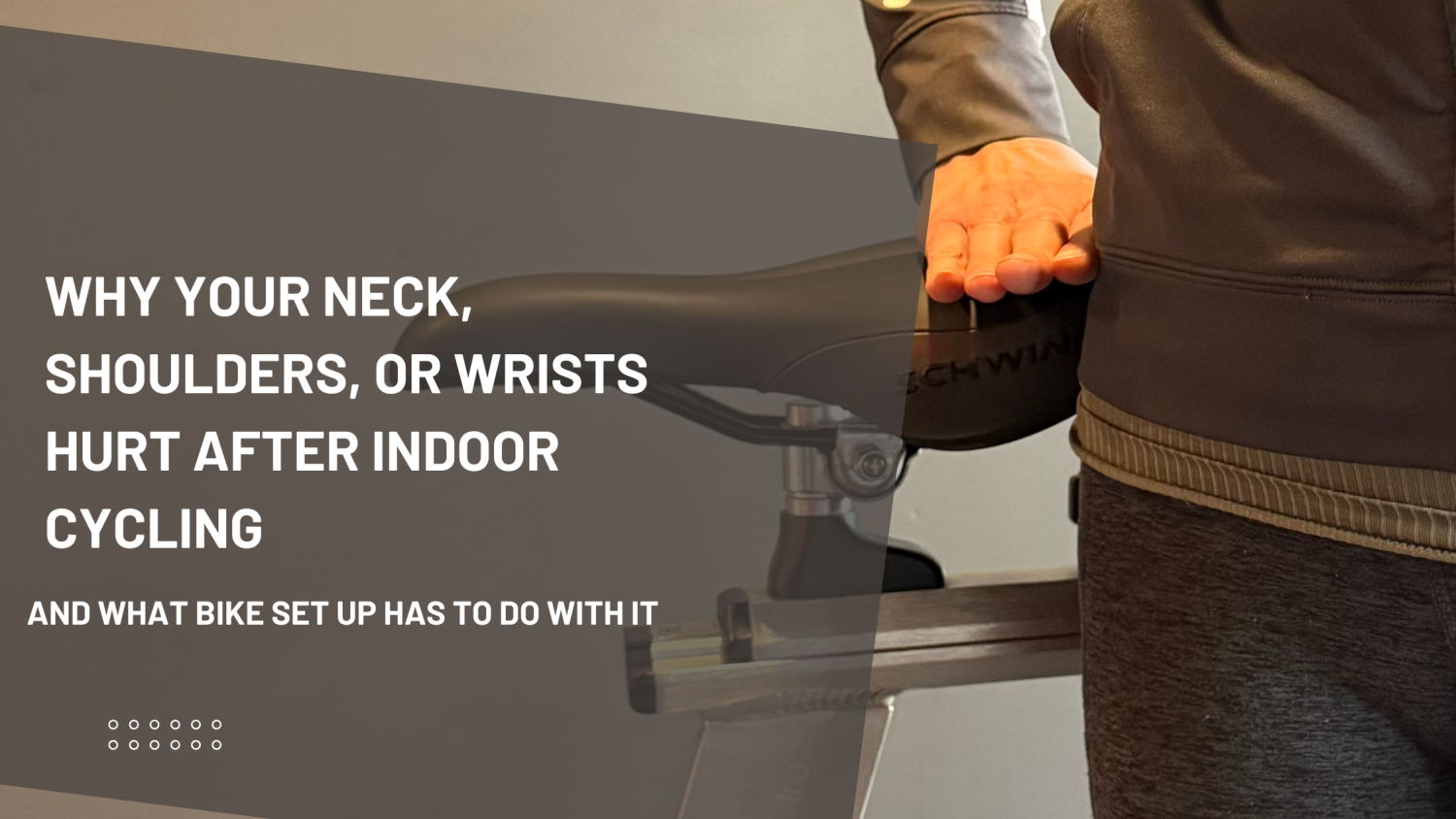
Why your neck, shoulders or wrists hurt after indoor cycling

Why Your Neck, Shoulders, or Wrists Hurt After Indoor Cycling (And What Bike Setup Has to Do With It)

Indoor cycling is often marketed as a lower-body workout, but many riders stop riding because of discomfort in their neck, shoulders, wrists, or hands. If your upper body feels more fatigued than your legs, there’s usually a reason — and it’s rarely about strength alone.

More often, it comes down to how your body is positioned on the bike and how your stationary bike is set up.

Why Indoor Cycling Places Demand on the Upper Body

Even though the legs are doing the pedaling, the upper body plays a major role in stability. Indoors, riders support their weight through the handlebars for extended periods of time, often without changing position.

This creates sustained load through:

• The wrists and hands  

• The shoulders and upper back  

• The neck and cervical spine  

Without proper alignment, these areas absorb more stress than they should.

Common Upper-Body Complaints After Riding

Upper-body discomfort can show up subtly at first and intensify over time.

Common sensations include:

• Wrist compression or numbness  

• Tight shoulders or burning fatigue  

• Neck tension or post-ride headaches  

• Feeling like you’re “dumping” into your hands  

These are not signs of poor effort or weak arms — they’re usually signs of imbalance.

Bike Setup Errors That Overload the Upper Body

When handlebars are too low or too far away, riders are forced to reach, placing excessive weight into the hands and shoulders.

If the saddle is positioned too far back, the body compensates by shifting forward, again loading the wrists and neck.

An aggressive reach or collapsed posture increases cervical strain and makes it harder for the core to support the torso.

Over time, this leads to discomfort that can make riding feel unsustainable.

How Proper Setup Redistributes Effort

With correct bike setup, weight is supported primarily through the saddle and legs, not the hands. The core can stabilize the torso, allowing the arms to remain light and relaxed.

Proper handlebar height supports a neutral spine. Correct reach reduces shoulder tension. Balanced saddle positioning prevents the forward weight shift that stresses the wrists and neck.

When setup is dialed in, riders often notice immediate relief in the upper body.

The Takeaway

If your neck, shoulders, or wrists hurt after indoor cycling, it doesn’t mean cardio cycling isn’t right for you. It usually means your bike isn’t supporting your body the way it should.

Learning how to properly set up your stationary bike can dramatically change how riding feels — not just in your legs, but throughout your entire body.

Comfort, longevity, and strength on the bike all start with alignment.

Why Indoor Cycling Can Make Your Hips Feel Tight

Why Indoor Cycling Can Make Your Hips Feel Tight (And How Bike Setup Plays a Role)

Indoor cycling is an incredible cardiovascular workout, but for many riders, it comes with an unexpected side effect: tight, pinchy, or fatigued hips. If you’ve ever stepped off the bike feeling locked up through the front of your hips or stiff in your low back, you’re not alone.

The good news? This discomfort isn’t an inevitable part of riding — and it’s often directly connected to how your indoor bike is set up.

Why Indoor Cycling Loads the Hips Differently

Unlike walking or running, cycling keeps the hips in a fixed, repetitive pattern. Indoors, there’s no variation in terrain, stride, or body position. The hips repeatedly move through flexion without the natural extension and rotation we get in daily movement.

Over time, this can create:

• Shortened hip flexors  

• Reduced hip extension  

• Increased strain on the low back and pelvis  

Without proper setup, the hips end up doing more work than they’re designed to do.

Common Hip Sensations Riders Experience

Hip-related discomfort doesn’t always feel the same from person to person. Some riders notice a deep tightness in the front of the hips, while others feel pinching, low-back fatigue, or a sense of being “jammed” when standing up after class.

Common complaints include:

• Front-of-hip pinching or pulling  

• Tightness that lingers after class  

• Low-back tension connected to the pelvis  

• Difficulty standing tall after riding  

These sensations are signals — not signs of weakness or lack of flexibility.

Bike Setup Mistakes That Contribute to Hip Tightness

Hip discomfort is often less about the ride itself and more about positioning.

A saddle that’s too low forces the hips into excessive flexion on every pedal stroke. Over time, this shortens the hip flexors and limits the body’s ability to fully extend.

A saddle positioned too far forward shifts the pelvis into an anterior tilt, increasing strain on the hip flexors and low back.

Handlebars that are too low or too far away can pull the torso forward, forcing the hips to compensate for poor spinal alignment.

Each of these setup issues adds up — especially across multiple rides per week and an intense cardio workout.

How Proper Bike Setup Supports Healthy Hip Mechanics

When your bike is set up correctly, the hips can move through a more balanced range of motion. Proper saddle height allows for fuller leg extension without locking the knees. Correct fore-and-aft positioning supports a neutral pelvis. Appropriate handlebar height reduces the need for the hips to stabilize the upper body.

The result is smoother pedaling, less gripping through the front of the hips, and a ride that feels strong rather than restrictive.

This is why learning how to properly set up your stationary bike is one of the most important steps in preventing hip discomfort and riding pain-free.

The Takeaway for Indoor Cycling

Hip tightness isn’t a personal failure or a sign that indoor cycling “isn’t for you.” It’s often a mechanical issue — and one that can be corrected with thoughtful setup and awareness.

When the bike supports your body instead of fighting it, indoor cycling becomes more fluid, sustainable, and enjoyable.

If your hips consistently feel tight or pinchy after riding, start with your setup. Small adjustments can make a massive difference.

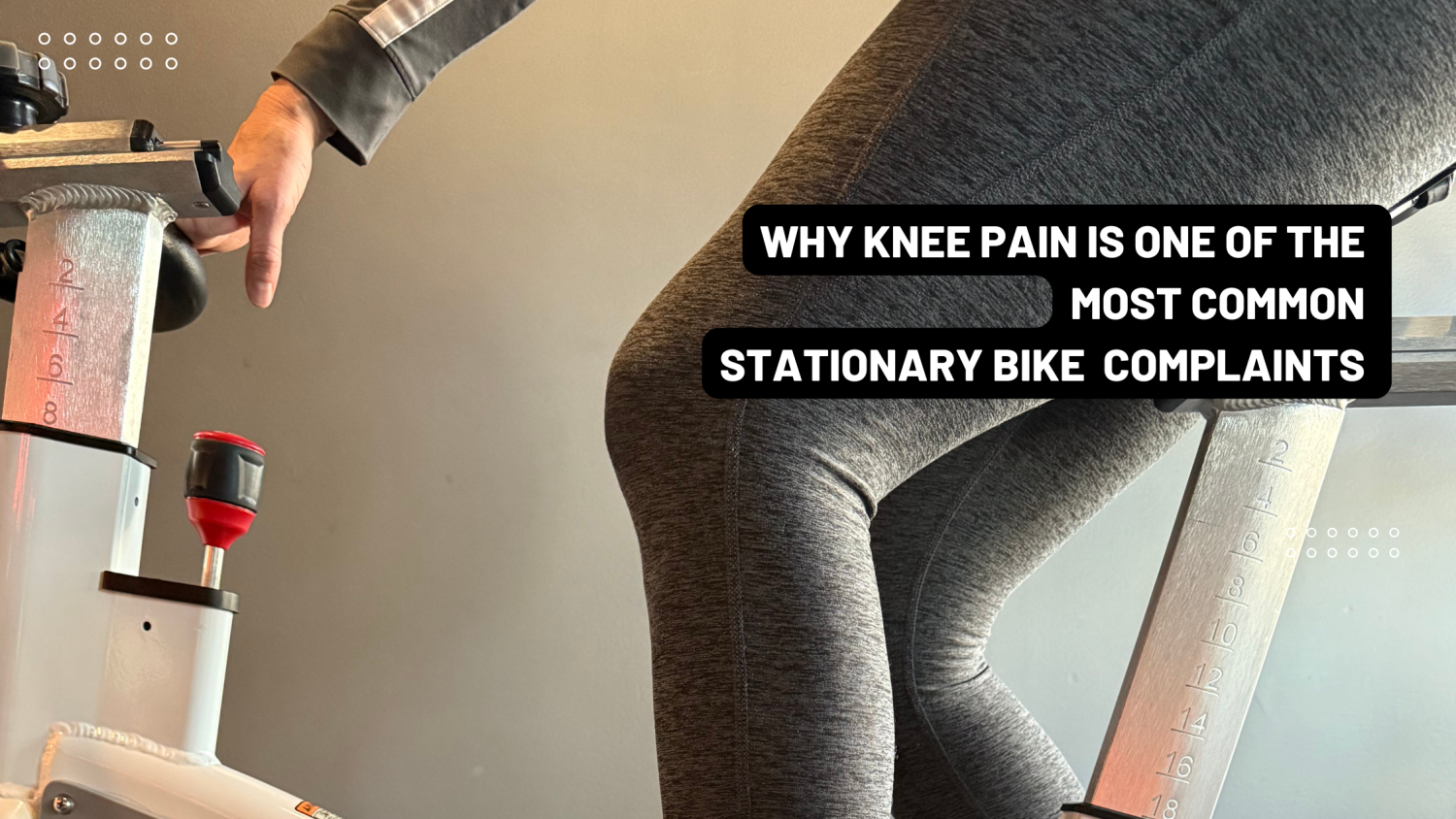
Why knee pain is one of the most common stationary bike complaints

Why knee pain is one of the most common stationary bike complaints

Knee pain is one of the first issues people experience when riding a stationary bike, especially if they’re new to cycling or returning after time away. What’s important to understand is that this discomfort is rarely caused by weakness, poor fitness, or “doing it wrong.” More often, it’s a mechanical issue caused by how the stationary bike is set up in relation to your body.

Because cycling is a repetitive motion, even a small misalignment can be magnified over hundreds or thousands of pedal strokes. The knee, which sits between the hip and the ankle, tends to absorb the consequences of those misalignments very quickly.

How seat height directly affects knee mechanics  

Seat height determines how much the knee bends and straightens during each pedal stroke. When this height is off, the knee is forced to work outside of its optimal range of motion.

At the bottom of the pedal stroke, the knee should still have a slight bend. This allows the muscles of the legs to share the workload evenly while protecting the joint from excessive compression or strain.

When the knee is asked to bend too much or straighten too far, discomfort often follows.

What happens when the seat is too low  

A seat that is set too low keeps the knee in a deeply bent position throughout the pedal cycle. This increases pressure at the front of the knee joint, particularly around the patellar tendon and kneecap.

Riders in this position often feel:

– pressure or aching at the front of the knee  

– fatigue in the quads very quickly  

– a sense that pedaling feels “heavy” even at low resistance  

Over time, this excessive bend can irritate the knee because the joint never gets a chance to move through a more natural, efficient range.

What happens when the seat is too high  

A seat that is too high creates the opposite problem. Instead of too much bend, the rider is forced to reach for the pedals at the bottom of the stroke.

This often leads to:

– subtle hip rocking side to side  

– uneven pressure through the legs  

– pulling or strain behind the knee  

Because the body is trying to compensate for the lack of reach, the knee can be stressed with every pedal stroke, even if the discomfort isn’t felt immediately.

Why hip movement matters for knee health  

The knee does not operate independently. When the hips are unstable or shifting, the knee is forced to manage forces it wasn’t designed to handle.

Hip rocking, which commonly occurs with a seat that’s too high, pulls on the knee from slightly different angles on every rotation. Over time, this can create irritation that feels confusing because the pain shows up at the knee, even though the problem originates higher up.

What proper seat height should feel like  

In a well-adjusted position, pedaling feels smooth and controlled. The legs extend naturally without locking, and the hips remain relatively steady on the saddle.

You should feel like:

– you’re pressing the pedals, not reaching for them  

– the movement is fluid rather than choppy  

– pressure through the knees feels even and predictable  

If something feels strained, forced, or unstable, it’s often a sign that the seat height needs adjustment.

Why setup matters more than resistance or intensity  

Many riders assume knee pain means they need to ride less, lower the resistance, or build more strength. While rest and conditioning matter, they won’t fix a mechanical mismatch between your body and the bike.

Correcting seat height and overall bike setup often resolves knee discomfort far more effectively than changing workout intensity or your overall cardio exercises. Getting the foundation right allows the joints to move the way they’re designed to, making cycling feel supportive rather than punishing.

For most riders, revisiting basic stationary bike setup is the most impactful first step toward pain-free riding.

Indoor Cycle Choreography Explained

Indoor Cycle Choreography Explained: 5 Go To Moves

5 Go To Moves You’ll See in Class

Indoor cycle (spin) choreography can be flashy or intimidating depending on which studio you choose. It’s intentional patterns you move through on the bike, guided by music, resistance, and clear cueing. These patterns help structure cardio training, keep the ride engaging, and allow riders of all levels to participate without confusion. Below are five go-to choreography moves you’ll regularly see in most indoor cycle classes and what they’re designed to do.

Climbs (seated and standing)  

Climbs are performed with added resistance and a slower, more powerful pedal stroke, both seated in the saddle and standing out of it. Seated climbs build muscular endurance and steady cardiovascular output, while standing climbs add strength, power, and postural engagement. In class, these are often layered together to simulate hills and create intensity without speed, allowing riders to control effort while staying connected to the music.

Sprints  

Sprints are short bursts of faster cadence performed with intention and clear timing. These moments are energetic, focused, and tied closely to musical accents. Sprints train cardiovascular capacity, quick responsiveness, and mental focus. In class, they’re used strategically rather than constantly, giving riders the chance to elevate heart rate, then recover, without turning the ride into chaos.

Jumps  

Jumps are smooth transitions between seated and standing positions, timed to the beat and clearly cued. Rather than fast hopping, jumps emphasize control, coordination, and breath. This movement builds functional strength in the legs while improving body awareness on the bike. Jumps also help break up longer efforts and add variety without increasing speed or impact.

Tap backs  

Tap backs involve shifting the hips slightly back over the saddle while maintaining resistance and rhythm. This movement targets the glutes and posterior chain while reinforcing stability and control. Tap backs are often used during climbs or rhythm-based sections to deepen muscular engagement and help riders feel strong, grounded, and supported through the legs.

Push-ups  

Push-ups on the bike are a controlled upper-body movement layered into riding, typically performed with steady resistance and slower tempo. They train upper-body strength, core stability, and coordination between the arms and legs. In class, push-ups add dimension to the ride and challenge riders to stay connected through the whole body rather than relying solely on the legs.

How it all fits together  

These indoor cycle choreography patterns are tools, not requirements. Every class layers them intentionally, with clear options and modifications so riders can adjust intensity while still moving with the group. Cycle choreography is designed to make cardio training effective, engaging, and accessible, whether it’s your first ride or your hundredth. When you step into class, these are the foundational movements you’ll experience again and again, each serving a specific purpose in building strength, stamina, and confidence on the bike.

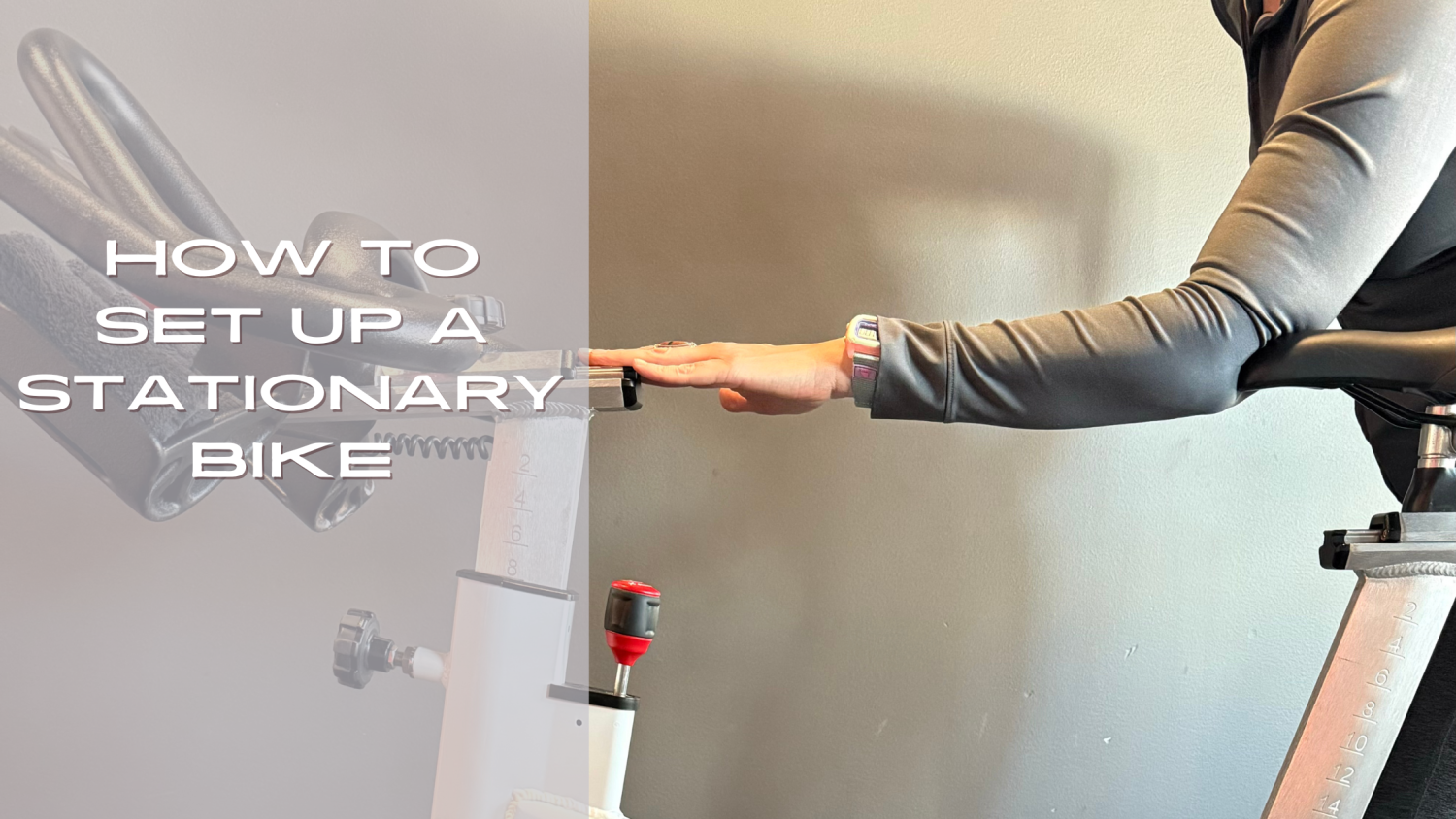
How to set up a stationary bike

How to Set Up a Stationary Bike

Setting up a stationary bike correctly can completely change how your indoor ride feels. When your bike is adjusted well, you’ll feel more stable, more powerful, and far less strained in your knees, hips, and lower back. A proper setup doesn’t just make the ride more comfortable—it helps you get more out of every minute on the bike.

Start with the seat height.

A simple way to find a good starting point is to stand next to the bike and bring the seat to about hip height. When you’re seated and pedaling, your leg should have a slight bend at the bottom of the pedal stroke. If the seat is too low, your knees will feel compressed and overworked. If it’s too high, your hips may rock side to side and you’ll lose stability and control.

Next, adjust the seat forward or back. This setting is often overlooked, but it makes a big difference in how balanced you feel on the bike. When your feet are on the pedals, your knees should feel stacked comfortably over the middle of your foot—not drifting too far forward or pulling too far back. If you feel like you’re constantly pushing yourself away from the handlebars or collapsing into them for support, your seat likely needs a small adjustment.

Handlebar height is about comfort, not intensity.

If you’re newer to cycling or returning after time away, it’s completely appropriate for the handlebars to be slightly higher than the seat. This allows you to breathe fully and keep your chest open without tension in your neck or shoulders. As you gain confidence and strength, you may choose to lower them slightly, but there’s no benefit to forcing a position that feels restrictive.

Foot placement matters more than people realize.

Aim to place the ball of your foot over the center of the pedal so your ankle can move naturally as you ride. Once you start pedaling, add enough resistance so the movement feels smooth and controlled