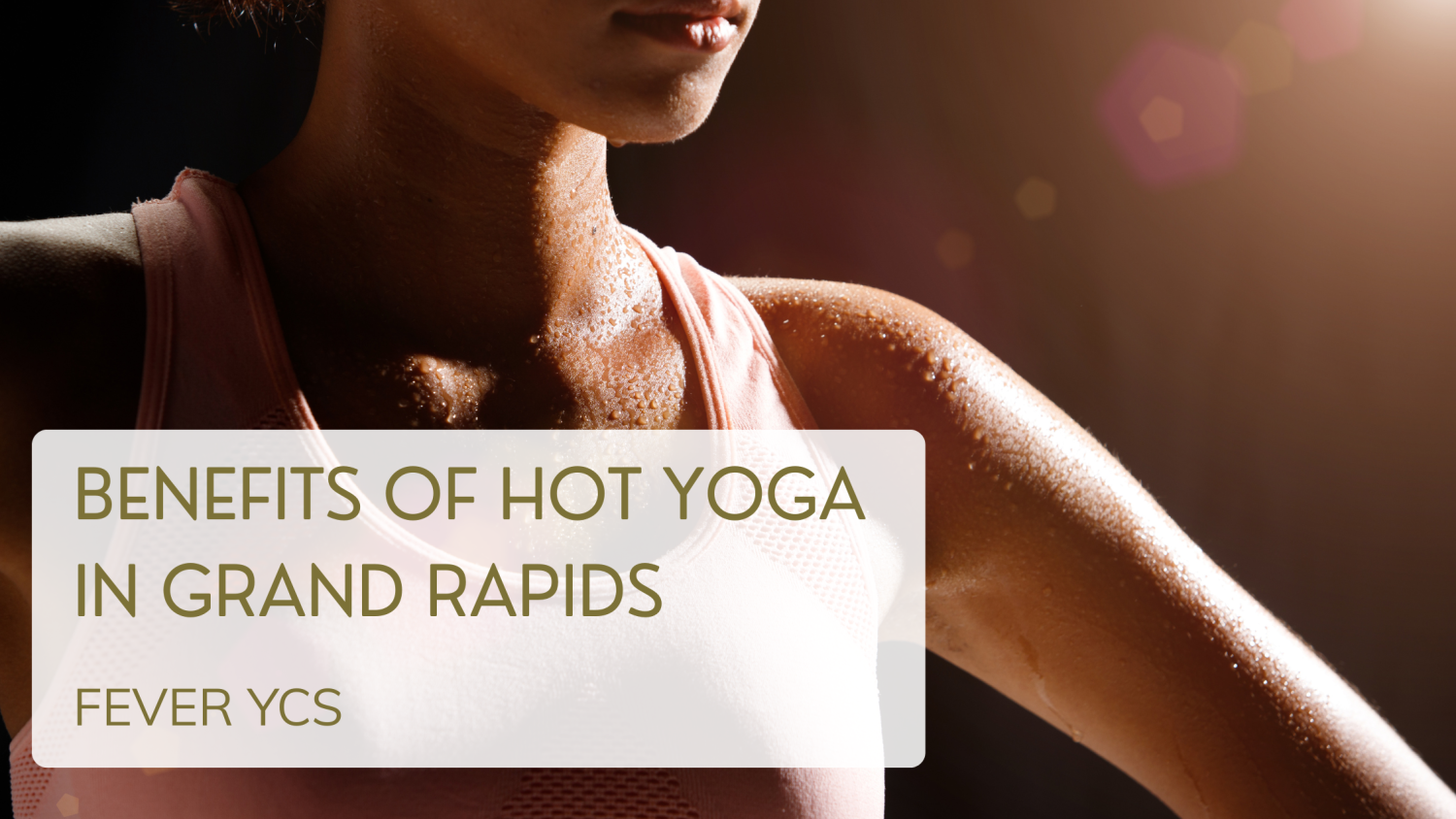
Explore the physical, mental, and therapeutic benefits of hot yoga. From improved flexibility and circulation to deeper strength, detoxification, and nervous system support, this category highlights how heated practice elevates your experience on and off the mat.

Benefits of Hot Yoga in Grand Rapids

Benefits of Hot Yoga in Grand Rapids

Hot yoga in Grand Rapids has really take off over the last several years, and for good reason. With Michigan’s long winters, desk-heavy work culture, and high stress levels, more people are turning to heated yoga as a way to stay strong, flexible, and mentally clear year-round. But beyond the sweat and intensity, hot yoga offers very real physical and nervous-system benefits that make it especially valuable here.

Here’s what hot yoga uniquely provides, and why it works so well for bodies living in West Michigan.

Improved Circulation in a Cold Climate

Grand Rapids spends a large part of the year in colder temperatures. Cold weather naturally tightens muscles, stiffens joints, and reduces circulation. Practicing yoga in a heated room counteracts that effect immediately. The warmth increases blood flow to muscles and connective tissue, helping the body move more freely and recover more efficiently between workouts or long workdays.

For many people locally, hot yoga becomes the difference between feeling stuck and feeling fluid during the winter months.

Deeper Flexibility Without Long Warm-Ups

In a traditional room-temperature class, it can take a long time for the body to fully warm up. In a heated environment, muscles soften much more quickly. This allows students to access deeper ranges of motion with less resistance, which is especially helpful for:

•   Tight hips from sitting

•   Stiff backs from driving or desk work

•   Limited shoulder mobility from overhead training

This doesn’t mean forcing depth. It means the body becomes more responsive sooner, allowing flexibility to improve safely with awareness and control. This makes hot yoga safe for beginners as the body adapts quickly and is more forgiving.

Strength + Endurance in One Session

Hot yoga builds strength differently than traditional strength training. Holding postures in heat increases muscular fatigue much faster, which improves:

•   Muscular endurance

•   Joint stability

•   Core strength

•   Postural control

Because the heart rate naturally rises in heated classes, you also receive a cardiovascular benefit at the same time. This makes hot yoga a powerful full-body training option for people in Grand Rapids who want maximum return in a limited workout window.

Support for Digestion and Lymphatic Movement

The combination of movement, heat, and breath encourages lymphatic flow and digestive stimulation. Many students notice improved regularity, reduced bloating, and a lighter feeling in the body with consistent practice. Sweating also supports fluid movement through tissues that commonly become stagnant with stress and inactivity.

This is one of the reasons hot yoga is often felt as “cleansing,” even though the true detox organs are the liver and kidneys.

Mental Resilience and Stress Regulation

Grand Rapids is a hardworking city with high professional and family demands. Hot yoga challenges the nervous system in a controlled way. The heat increases sensory input, which requires strong focus, breath control, and mental steadiness. Over time, this builds:

•   Improved stress tolerance

•   Better emotional regulation

•   Greater mental clarity

•   A stronger sense of internal calm under pressure

Many people find that the skills learned in hot yoga directly transfer into daily life, helping them stay grounded in high-demand environments.

Consistent Practice Through All Seasons

One of the biggest benefits of hot yoga in Grand Rapids is consistency. When it’s dark, icy, or bitter cold outside, motivation often drops. Heated indoor practice provides a reliable training environment year-round. Students don’t have to rely on weather, daylight, or outdoor conditions to keep moving.

This consistency is what leads to long-term results in strength, flexibility, and mental health — not just short-term fitness bursts.

Improved Breath Awareness and Lung Capacity

Breathing in heat requires efficiency. Students quickly learn how to slow the breath, regulate CO₂ tolerance, and stay calm under load. Over time, this improves:

•   Lung capacity

•   Breath control under stress

•   Endurance in other workouts

•   Overall oxygen efficiency

This makes hot yoga an excellent complement to cycling, running, strength training, and high-output fitness modalities common in the Grand Rapids fitness community.

Body Awareness and Injury Prevention

Because heat amplifies sensation, students become more aware of their physical thresholds. This heightened proprioception improves joint safety and teaches people how to distinguish between productive effort and strain. For many, this leads to fewer overuse injuries and better movement choices in daily life.

Who Hot Yoga Is Especially Helpful For in Grand Rapids

Hot yoga tends to be particularly beneficial for:

•   People who sit most of the day

•   Cold-weather tightness and seasonal stiffness

•   Athletes looking for mobility and recovery

•   High-stress professionals

•   Anyone wanting strength, cardio, and flexibility in one session

It’s also ideal for students who struggle to feel fully warmed up in traditional classes.

A Final Word

Hot yoga in Grand Rapids is more than just a trend — it’s a practical response to climate, lifestyle, and stress. The combination of heat, breath, and intelligent movement helps the body stay mobile, the mind stay clear, and the nervous system stay resilient through every season.

Whether you’re new to hot yoga or looking to deepen your physical and mental practice, hot yoga offers a powerful, sustainable way to support your health right here in West Michigan.

Book your first hot yoga class at Fever Yoga Cycle Strength.

how to avoid dehydration during hot yoga

How to Avoid Dehydration During Hot Yoga

“Make sure you drink lots of water.” I’m sure most of you have heard this at Fever Yoga Cycle Strength as you’re rolling up your mat and packing to leave class. In fact, you hear this tip frequently, whether you’re training for a race, practicing yoga in heated rooms, or simply maintaining a healthy life.

The statement itself sounds simple enough, but I often notice dehydrated students in our hot yoga classes in Grand Rapids. Recognizing this problem up a list of other questions: What is the best way to hydrate? How do you know if you’ve had enough water? What are the key signs to look out for to avoid dehydration?

Tiredness, dizziness, cramped muscles, or no sweat – even in our incredibly hot room – are a few symptoms of dehydration. For beginners to hot yoga, it’s totally acceptable to require a few classes for your body to acclimate to the heat, but continued struggle can be a sign of not enough water.

We’ve talked before about the best tips and tricks to nourish your body before a hot yoga class, but I want to focus on the critical importance of hydration.

Prepping for Your Hot Yoga Class in Grand Rapids

Enter the hot yoga studio already properly hydrated. It’s simply too hard to do it once you’re already in the room, as it takes your body about 45 minutes to process water. Hydration before yoga is essential to avoiding stiffness and cramping. Ideally, the bottle you bring will simply be for refreshment.

Then, make absolutely sure that you hydrate after class. I know many of you lead busy lives and are running off to the next thing after class, but don’t ditch that water bottle! Nutritionists recommend drinking at least 20 ounces of water after class to replace the fluids you burned off during class.

Sneaky Tips to Getting the Right Hydration for Hot Yoga

When practicing hot yoga or Hot Pilates, you simply cannot hydrate properly with water alone; you need the right balance of water and electrolytes. However, I advise against the many sports drinks out there, as they often have too much sodium and sugar. Coconut water, though, cannot be beat! With five key electrolytes, along with vitamins and potassium, it’s an ideal alternative. In fact, coconut water is so similar to blood plasma that it can be used as intravenous fluid in emergency transfusions – crazy, right?

Eat your water. The right foods can help you stay hydrated. Fruits and vegetables – especially lettuce, broccoli, grapefruit, cucumber, and watermelon – will increase your metabolism.

Spike your drink. Sometimes water needs a little boost of flavor. If you’re growing tired of your water intake, enhance your water with a kick of flavor – whether it’s a natural remedy like cucumbers, oranges, or lemons or a flavored powder.

I want to challenge each of you to embark on your own personal hydration challenge. Sip on water all day, even when you don’t feel thirsty. Fill your reusable bottle as soon as you finish it. Slowly drink a bottle of water over the course of the hour leading up to yoga class. And drink another in the 30 minutes after class. Stock up on produce high in water volume. Give it a week and see how your yoga practice is transformed!

building heat with the practice of yoga

Building Heat in the Body with the Practice of Yoga

When we’re cold, our circulation decreases, which leads to constriction in the muscles and joints. Though I know how tempting it can be to avoid the snowy roads and stay snuggled up on your cozy couch, winter weather is actually one of the best times to keep up a consistent hot yoga practice. Through our practice, we develop an internal heat to keep us warm, happy, and healthy.

I suggest focusing on four specific practices this season: develop strong, consistent breath; work those abs until they burn; consume Ayurveda-friendly warm, seasonal foods and get yourself to the nearest hot yoga room.

Strong Breath

Kapalabhati is a cleansing breath technique in which you start in a comfortable seated position with a tall spine. Draw in a long inhale, then exhale forcefully from your lower belly. Continue pushing breath outward in this way without inhaling – the inhale happens naturally, I promise!

Focus on exhaling over and over again, starting with a steady pace before moving faster. After about 20 repetitions, exhale all your air out and draw in another deep breath. Slowly sigh it out. You can repeat this breathing style twice more, allowing for that important rested breath between rounds.

This breathing style removes carbon dioxide from your lungs and brings energy into your body.

Core Strength

Heat is created from your body’s furnace, located in the belly center. In yoga, we call this area the Manipura chakra, which is connected to the element of fire. Any work done in your core area will provide warmth. In the winter, we like to spend time prepping the body before diving into the more difficult core exercises.

We may start with abdominal exercises that keep the spine fully supported by the floor. We’ll move into a couple rounds of Locust pose, while focusing on a very regulated breath. You’ll often find yourself in navasana (boat pose) later in class. Seated forward folds are sometimes used in the cooling portion of class, as we focus on contracting the belly on each exhale.

Nutritional Support

The sister science of yoga, Ayurveda, states that “like attracts like.” This means that the kapha and vata doshas tend to become aggravated during our dark, cold Michigan winters. The climate is simply too similar to their natural qualities. If you’re finding yourself experiencing many colds, poor circulation, joint pains, or negative emotions, try some of these tips.

Definitely eat plenty of soups, stews, cooked vegetables, and grains. Avoid cold salads and sandwiches.

Start your day with a hearty, warm breakfast to feed your digestive fire. Oatmeal is a great option.

Season your foods with warming spices, such as cinnamon, black pepper, cumin, and nutmeg.

Drink warm teas, hot water with lemon, or dry red wine to encourage circulation and stimulate digestion.

If you naturally tend to eat warmer, heartier foods in the winter – like soup, stir fry, casserole, quiches, pasta – you’re on the right track! While our bodies are designed to eat more in the winter, it’s still important to select your food carefully.

The cold, dry, and dark winter months can certainly tempt us away from our practice – and excercise in general. If we fall victim to that temptation, though, we’ll experience a number of negative consequences. I challenge you this winter to use your yoga practice as a means of caring for your entire being. Challenge yourself to practice a certain amount of days each week. For at least 60 minutes, you’ll be incredibly warm and fiery!

If you would like to learn more about building heat in the body using the sister science of yoga, Ayurveda, please visit Laura Burkett at Real Food Wellness.

Hot Yoga Studio

The hot yoga studio creates a sauna like atmosphere that will naturally detoxify the body while warming the external sheath, bones, muscles, ligaments and joints. Hot yoga raises your heart rate and core temperature, which dilates blood vessels and increases circulation in your muscles—a total win when muscles are stiffer in the cold weather months. Essentially, hot yoga helps build the heat from the core to the periphery and the periphery back to the core.

If you’re interested in learning more about our hot yoga studio, please call(616) 805-3603 and speak to Brittany Sanagustin or anyone on the Yoga Fever staff. We can help guide you into a safe, cozy practice designed to keep you warm all year long!

yoga for runners

Yoga for Runners

Rolling out a yoga mat may just improve your running skills

Studies show that the strength and flexibility you gain on the mat can help you run more efficiently and stay injury-free. Yoga opens up several muscle groups in the legs such as the quads, IT band,  hip flexors, psoas (core), and hammys.

According to several sources, yoga can be the key to faster running times

The science of cardio exercise and running mechanics are fairly simple. Efficient and fast times are credited to alignment. Building from the ground up, feet to head is key to a successful run. Yoga has the power to change any misalignment in the body… even moving bones over time. Yes, it’s true. Strengthening and lengthening the muscles improves the alignment of the body greatly.

Runners benefit from opening the overworked leg muscles. There is also great benefit to gaining core strength to help towards the middle or end miles of your run.

How does yoga increase your speed?

Apparently, the fastest runners have an amazing 20 – 25% angle at the hip flexor and a 5% arc in the back. Back bends and hip openers provide flexibility which increases speed. If you are a runner, get on your mat and check out the benefits it can provide your body.

Hot yoga and diabetes

Hot Yoga and Diabetes

Can I do hot yoga if I have diabetes?

Yes, you can absolutely do hot yoga if you have diabetes. However, being mindful of your blood sugar level and hydration is key. Checking your blood sugar before and after class is a good rule of thumb to measure where your levels are with the incorporation of vigorous heated exercise.

Your glucose level may spike after a hot yoga class due to the stress on the body, heat and humidity. Since Diabetes varies in degree and from person to person, it is important to begin a hot yoga routine with a keen eye on your body, how you feel after class, and checking your insulin levels.

Take the time to rest after class if you have Diabetes

Don’t rush to get out the door to head home if you are finishing up a hot yoga class and you are diabetic. Give it a few minutes, relax, linger, take your time! Replenish as much fluids as you can before you get behind the wheel to head home. If you feel light headed, disoriented, or out of sorts in anyway, you should stay put and talk to someone at the studio about how your feeling. They can help you to find a relaxing location where you can check your insulin levels and rest your head.

Consult your physician

Talking to your Doc before incorporating hot yoga into your routine is always a good idea but especially if you are type I or type II diabetic. Be sure that this is a safe practice for you by getting the green light from your primary care.

Exercise is a natural healer

Hot yoga, running, traditional yoga, and exercise of any kind is a natural healer of the body and mind. If you check with your doc and monitor yourself closely, there should be nothing holding you back from picking up a regular hot yoga routine.

Congrats on getting healthy!

what to expect at your first yoga class

What To Expect At Your First Yoga Class

Yoga for Beginners

So you’ve decided to start a new chapter and take your first yoga class. Good for you! We admire steps toward positive change. Jumping on the yoga train can be scary, we know it. We’ve all been there. Not only are you chartering new territory with your first yoga class but also jumping right into a heated class! There are several questions that you may be asking yourself regarding your first class. Let’s highlight a few Q & A’s, with some great tips to set your mind at ease.

Can I handle the heat?

We won’t lie, the heat will feel pretty intense your first time around. Be prepared to sweat. The atmosphere is controlled to be a toasty 90 degrees in our hot yoga 101 classes. Know that you can step out of the room at any time if you feel it necessary. The heat helps heal and nourish the muscles, joints and the mind. It is there to help guide you into a smooth practice, not make you suffer. After class, you will notice a sense of peace, energy release and an overall sense of well being. We like to say that you can shed a skin on your mat in a heated class…leaving behind the residue that doesn’t serve you.

Will I be awkward with everyone looking at me?

You may feel slightly awkward as you learn about creating new and creative ways to shape your body and your mind. This is totally normal. Go with the weirdness. No one is judging you. The goal in a yoga space is to check your ego at the door and go inward. You may have other fellow beginners looking around for guidance but nothing to take too seriously. As you progress and grow into other classes, no one is looking around to check you out. This is an internal practice and each experience is personal and unique.

What should I wear?

You don’t need to buy expensive clothing to hit your first warm or hot yoga 101 class. There is no point in investing a lot of money on outfits for your first time in. We believe form-fitting clothing that will not interfere with the movement of the body is best. Keep running shorts and t-shirt for the gym or your morning run. Tight clothing that breathes will help you stay focused on the yoga practice and not your clothes riding up in all the wrong places.

Please check your shoes at the door. Yoga is best performed with bare feet as it will help you maintain grip. Do what feels best for you!

Am I flexible enough to do yoga?

Every hot yoga studio will tell you the phrase they hear most is ‘I’m not flexible enough to do yoga’. There is a common misconception attached to yoga due to images in society that you must have a ballerina type body that can twist into a pretzel or the splits on demand. Not true! Yoga is good for every “body”. We have all shapes, sizes, and age groups in our hot yoga classes.

Long story short… Yes, you are flexible enough to do yoga. In fact, no flexibility is required to take a yoga class. With time, patience, and consistent practice, you will become more flexible in your body and in your mind (which is the true goal of yoga anyway).

What should I bring with me?

Please bring a water bottle with you so you can stay hydrated. We also sell water with to help replenish the body before, during and after your hot yoga class. We may not always cue you to grab a drink, so listen to your body and sip your water anytime you need nourishment and hydration. If you have a yoga mat, bring it with you or rent one of our yoga mats or large mat towels for your first time. Our mats are specific to hot yoga so they will provide more grip and traction on your mat.

What should I do if I feel lost or overwhelmed?

We guide you through a safe and soft practice your first time around and in every beginner class. Know that yoga is very visual as a beginner. Some stay in Yoga 101 permanently as they are injured or prefer to move intentionally and slowly. Please feel free to look around, see what everyone else is doing. Your teacher will also guide you through the demonstration. It’s always good to listen to your body if you need a break. Childs pose is what we call a ‘rest pose’. To come into this pose bring the knees down to the mat, bring the great toes together, slide the hips toward the heels and sink the torso in between the inner thighs. The forehead touches down and the arms can be stretched long in front of you or down by your sides. You will see many yogis at ALL levels taking this pose for a break for their body. We recommend using this pose frequently as a newbie to the practice. Here you can come back to your breath and surrender until you are ready to rejoin the class. If child’s pose feels too intense on your knees just come down onto your back or belly and rest. Your mat awaits…