A collection of stories, insights, and teachings from the Fever | Yoga Cycle Strength community. Yoga-inspired education, lifestyle tips, and studio updates.

Common hot yoga myths

Common Hot Yoga Myths

Hot yoga has been practiced for decades, yet it continues to carry a surprising number of misconceptions. Some of these myths come from misunderstanding the role of heat. Others come from experiences that were never properly explained. When you look beyond the assumptions, hot yoga reveals itself as a thoughtful, adaptable, and deeply grounding practice.

Here are the most common myths — and what’s actually true.

Many people believe you need to already be flexible to take a hot yoga class.

In reality, flexibility improves over time. Hot yoga attracts people who are stiff, sore, or simply curious about moving differently. The warmth can help muscles feel more receptive to movement, but no one walks in flexible on day one. The practice meets you where you are.

Another widespread belief is that hot yoga is dangerous.

Like any form of movement, it requires awareness, hydration, and rest when needed. Most issues happen when people feel pressure to push past their limits instead of listening to their body. A well-taught hot yoga class emphasizes breath, pacing, and self-regulation, not endurance at all costs.

It’s also common to hear that hot yoga is only about sweating.

Sweat is a natural response to warmth, but it isn’t the purpose of the practice. The real value lies in how heat sharpens awareness. Sensation becomes more noticeable, breath becomes more intentional, and subtle alignment shifts become easier to feel. It’s not about how much you sweat — it’s about how present you are.

Some assume that hot yoga is only for advanced practitioners.

This couldn’t be further from the truth. Most hot yoga classes offer a wide range of options so beginners and experienced students can practice in the same room. Hot yoga is absolutely a beginner-friendly environment. Resting, modifying, or skipping poses is not only acceptable — it’s encouraged. Hot yoga adapts to the person, not the other way around.

Another myth is that hot yoga is a passing trend.

In reality, heated movement practices have been around for decades. The reason hot yoga continues to resonate isn’t because it’s fashionable, but because it works. As more people explore the connection between movement, breath, and the nervous system, the relevance of hot yoga continues to deepen rather than fade.

Another common belief is that you can’t practice hot yoga during pregnancy.

What’s often missed in that conversation is the difference between starting hot yoga while pregnant and continuing a practice your body is already deeply acclimated to.

For someone who has never practiced in heated conditions, pregnancy is not the time to introduce that kind of environmental stress. The body is already adapting in major ways, and heat tolerance hasn’t been trained yet.

However, for people who have practiced hot yoga consistently before becoming pregnant, the body is already conditioned to the environment. Many experienced practitioners choose to continue their hot yoga practice throughout pregnancy, adjusting intensity, taking more rest, avoiding deep twists and compressive shapes, and staying closely attuned to their body’s signals.

The key distinction is not pregnancy itself — it’s acclimation. The body that has spent years adapting to heat is responding very differently than a body encountering it for the first time.

This is why the practice becomes less about rules and more about relationship: knowing your own baseline, honoring your limits, and allowing the practice to evolve alongside the changes already happening within you.

Finally, many believe they should push through discomfort in a hot yoga class.

One of the most valuable lessons in the practice is learning the difference between sensation and strain. Heat amplifies feedback from the body, making it easier to notice when something feels supportive versus overwhelming. Pausing, resting, or stepping back is not a failure — it’s a sign of intelligence within the practice.

Hot yoga isn’t about extremes. It’s about awareness, adaptability, and learning to listen more closely to your own experience. When approached with curiosity instead of expectation, it becomes far less intimidating — and far more meaningful.

Do Grand Rapids locals prefer working out in the morning or afternoon?

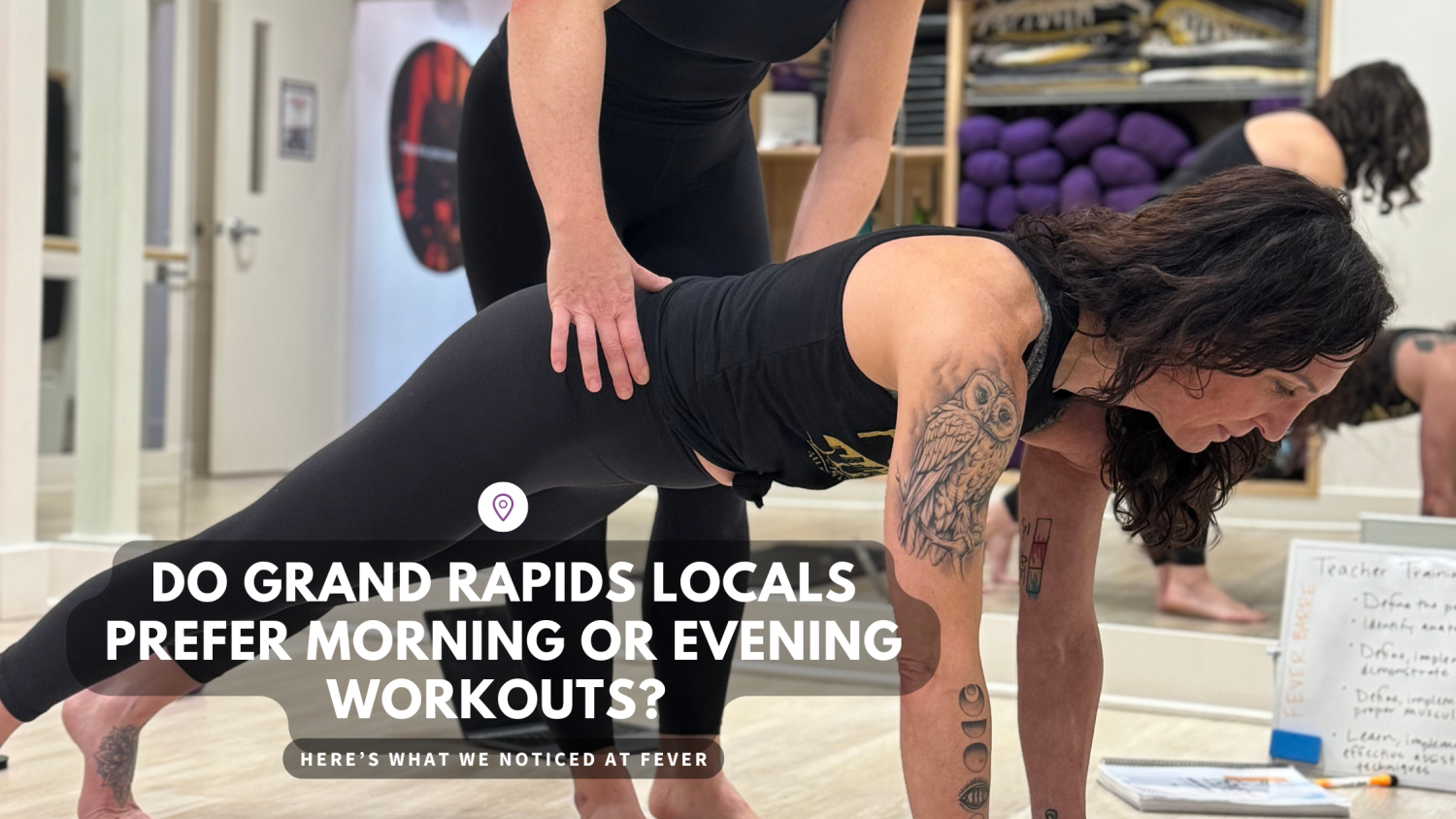
Do Grand Rapids Locals Prefer Morning or Evening Workouts?

If you’re trying to find the best time to work out in Grand Rapids, you’re not alone. One of the most common questions we hear at Fever Yoga Cycle Strength is: “Should I be working out in the morning or the evening?” While both options have benefits, we’ve noticed clear patterns right here in our community—and we’re here to help you discover what works best for you. Building a balanced fitness week is key to a successful routine.

Morning Workouts in Grand Rapids

Many of our members love the sense of accomplishment that comes from getting their movement in early. Whether it’s a sunrise hot yoga class, a focused barre session, or a strength class that jump-starts your day, morning workouts offer:

•   A mood and energy boost (thanks, endorphins)

•   Better consistency and fewer schedule interruptions

•   A sense of community with other early risers

At our Grand Rapids fitness studio, popular morning classes include hot yoga, barre sculpt, strength training and cycle—especially before work hours.

Evening Workouts in Grand Rapids

For others, evening workouts at Fever offer a welcome release after a busy day. Whether you’re sweating it out in a high-energy cycle class, building strength with resistance training, or grounding down with yoga, evening workouts:

•   Help release daily stress

•   Offer more flexibility for late risers or parents

•   Often feel more social and community-driven

We see consistent turnout for evening hot yoga in Grand Rapids, especially among those who prefer to work out after 5 p.m.

Which Is Best? The Answer: It Depends on You.

Whether you prefer AM or PM workouts, we’ve got options to meet your schedule. Our goal at Fever is to support your long-term consistency—so choose the time that helps you show up most regularly.

Looking to build a habit? Start with 2–3 classes per week during your preferred window, and mix in a variety of modalities:

•   Barre, Pilates, Hot Pilates and Hot Barre in Grand Rapids for strength and alignment

•   Hot yoga for detox, flexibility, and empowerment

•   Group personal strength training  for guided results

•   Cycle classes in Grand Rapids for high-energy cardio

Final Thoughts

At Fever YCS, we offer morning and evening fitness classes because we know one size doesn’t fit all. Your lifestyle, energy levels, and goals matter—and we’re here to support them with flexible schedules, welcoming instructors, and results-driven programming.

What is Cross-Training?

What is Cross-Training?

What is Cross-Training?

Once you find a style of workout you enjoy, it’s easy to get stuck in a routine. Other forms of exercise might seem difficult or intimidating, so you avoid them altogether and stick to what you know. While there’s nothing inherently wrong with focusing on one form of exercise, you might be missing out on potential results and the opportunity to increase your overall strength. Cross-training with a balanced fitness routine is one way you can keep achieving results and avoid getting in a rut.

Understanding Cross-Training

Put simply, cross-training means practicing a different form of exercise than your typical routine, or regularly incorporating a variety of workouts that target different muscle groups. The purpose of cross-training is to improve your fitness and performance by increasing your overall strength and fill in any gaps or shortcomings created by your typical form of exercise.

Although any exercise is good exercise, being intentional about the type of cross-training you choose can help you achieve your goals and build strength in specific areas you want to improve. For example, a runner might swap out one run a week for a 30 minute HIIT, or add an indoor cycling class to their weekly routine to increase their endurance. Someone who practices yoga frequently might benefit from adding in strength-training sessions to build their overall muscle, flexibility, and core strength.

Benefits of Cross-Training

In addition to helping you build strength, one of the main benefits of cross-training is avoiding mental boredom and burnout. No matter how much you love your yoga sessions or your cycling class, you may find yourself feeling complacent and seeing slower results if you focus all your energy on one type of exercise. Trying different types of workouts might be the boost you need, challenging your mind and body to stay engaged and achieve new goals.

Incorporating different workouts in your routine will not only help you keep things interesting, but it will also help you avoid injury from over-exertion. Cross-training allows certain muscles to rest and recover while you focus on others, and will even allow you to continue training if you do experience injury in one muscle group.

Focusing on full-body conditioning will give you a higher level of strength in whatever workout you choose to do and improves your overall endurance, agility, and balance. Switching up your workouts also keeps your body from getting too well-adjusted to your routine and will help you continue to see results over time.

This week, challenge yourself to step outside your comfort zone and incorporate cross-training into your routine. The options are endless:Feverycs.com