Posts

is meditation the missing piece in your fitness journey?

Is Meditation the Missing Piece in Your Fitness Journey?

When most people hear the word meditation, they picture someone sitting cross-legged in a quiet room, eyes closed, trying to “empty” their mind. It sounds boring, uncomfortable, or even impossible — especially for those of us who thrive on movement, energy, and connection.

But what if I told you meditation isn’t actually about emptying your mind at all? What if, instead, it’s about training your mind and body to create the future you want — in the same way you train your muscles in the studio?

That’s exactly what I’ve been exploring through the work of Dr. Joe Dispenza. His approach to meditation goes far beyond stillness or stress relief. It’s about becoming the creator of your life. You don’t just sit there waiting for something to happen — you set an intention and give your body and brain a new blueprint to follow.

Why is meditation so hard for so many of us?

We live in a world that constantly pulls us outward: workouts, work schedules, social feeds, family demands. We’re always doing, but rarely being. Even in fitness, we can get caught in that endless loop — pushing harder, adding more classes, trying to outdo ourselves.

The problem? You can’t truly build strength or find balance if your mind is running the same old stories. That’s where meditation comes in as the missing piece.

Meditation as mental strength training

Think of meditation as mental strength training — the same way you strengthen your glutes or core. In Dr. Joe’s approach, you’re not just relaxing; you’re rehearsing a new future. You’re teaching your nervous system to feel elevated emotions like gratitude, love, joy — before the physical evidence shows up.

When you practice this consistently, you start to move differently, teach differently, and live differently. You become less reactive, more creative, and more aligned with your goals — in and out of the studio.

When you change your energy, you change your life.” – Dr. Joe Dispenza

Where to start (even if you’re skeptical)

You don’t need hours on a cushion or a silent retreat. You can start small:

  •     Set an intention before your workout or your day. Ask yourself: How do I want to feel today? Who do I want to be when I leave this room?
  •    Take five minutes to breathe deeply and visualize yourself already living that intention. Perhaps you invite this in at the end of your yoga practice in Savasana.
  •     Notice your patterns — are you telling yourself you’re too busy, too old, not good enough? What if that story is exactly what’s holding you back?

These small moments build up. Just like lifting weights or practicing your yoga poses, each repetition rewires you.


Ready to explore this with me?

I’ll be sharing more about integrating these practices into my own life and into classes in the future. Please note I am not a Neuroscience Change Solutions provider and can only offer support on these practices. For now, I invite you to start playing with this idea. If you’re curious to go deeper, you can explore Dr. Joe Dispenza’s work here https://drjoedispenza.com/

Meditation: The Art of Focusing your Mind

Meditation: the art of focusing your mind

We spend almost every day in the fast lane of life, facing enormous challenges like juggling finances, family, career, and relationships all at once. Ever feel like you’re running on empty?

Keeping up with such a hectic pace produces high anxiety and stress, which causes us to become disconnected, mechanical, and sometimes numb. We end up living in our heads when we were created to live from our hearts.

One solution to this is to develop or strengthen a regular yoga practice. But today, we’re diving into yoga’s sister: meditation.

Meditation is often referred to as the art of doing nothing. While it certainly is an art—in the sense that you must practice it just like you do your physical asanas—there’s a lot more going on in your body and mind than what this catchy phrase suggests.

I prefer: the art of focusing your mind. And it does take work to quiet your busy mind. But the more you practice and the more you’re able to quiet your thoughts, the more you will experience a sense of true presence – creating the mind-body connection yoga is known for.

Meditation offers a wide range of amazing benefits, including:

  • Stress and anxiety reduction
  • Enhanced self-awareness
  • Lengthened attention span
  • Reduced age-related memory loss
  • Improved sleep

There are two major styles of meditation:

  1. Focused-attention meditation: concentrates attention on a single object, thought, breathing pattern, or mantra.
  2. Open-monitoring meditation: encourages broadened awareness of all aspects of your environment, including thoughts, feelings, or impulses you might normally suppress.

The following 7 meditation styles all fall within one of these two groupings.

Transcendental: In transcendental meditation, you remain seated with your eyes closed and breathe slowly while repeating a mantra (a word or phrase) with the goal of rising above your state of being. If you choose to try this meditation style, practice twice a day for 20 minutes each session. This allows time to settle inward to a profound state of relaxation and rest.

Breath awareness: Have you ever found yourself in your driveway with no recollection of your drive home? Breath awareness meditation ensures that this does not happen while you’re practicing. The goal is to keep your mind fully focused on the present. It builds patience for your everyday life. For example, rather than reflecting on the annoyance of a traffic jam, a skilled practitioner will simply note the delay without judgment.

Zazen sit: Similar to breath awareness meditation, the zazen sit style focuses on sitting in concentration while counting each breath. When zazen is deeply integrated, you should not feel that each part of your body is separate from the others—you should feel a sense of wholeness.

Walking meditation: This style will improve your cardiovascular health, boost your energy, stabilize your mood, and help you embrace the present. Begin by walking at a normal pace, tuning into your natural breath and noticing what it’s like. Then, refine your breath so it’s nasally and free of irregularities. Coordinate your breath so that you’re inhaling for four steps, then exhaling for another four. These should be short puffs of air. Continue for five minutes, then walk and breathe normally for three before repeating.

Guided meditation: For this meditation form, you don’t need any prior experience or knowledge; you’re simply required to listen to an instructor (a real person or via headphones). The goal is to form mental pictures based on situations and experiences you find relaxing. Use as many senses as possible—smell, sound, and texture—to evoke calmness.

Devotional or mantra chant: In this meditation style, you’ll chant a mantra (a sound like “om”) to keep your mind busy while you focus on breathing. This is a powerful and effective method because of the vibratory effects of the sounds that stimulate your body.

Yoga nidra: Also known as progressive relaxation or body scan meditation, the goal is to move through your body noticing areas of tension—then releasing that tension. You’ll start at one end of your body (usually your feet) and work all the way to the other end. You might envision a wave drifting slowly over your body. Because this meditation style slowly and steadily relaxes your body, many people use this to help them fall asleep.

As you can see, there are many different styles of meditation to choose from. I encourage you to give a few of these a try, while keeping a journal or log on your reflections about each type. You can truly practice meditation anywhere – from a quiet corner of your home to a crowded grocery store! So what’s stopping you?

photo courtesy of Shannon Austin

tips for creating your ideal meditation space

Tips for Creating Your Ideal Meditation Space

Interestingly, one of the main reasons we practice an active form of yoga is to help our bodies become capable of doing the opposite: sitting in stillness and meditation. This time of year, as we enter the busyness of holidays, parties, shopping, and cooking, I always find myself craving a quiet and meditative outlet.

As a small business owner, I know as well as anyone the challenges of finding a time and space to rest. To breathe, to think, to relax, and to unwind. I know that adding time into your daily life for stillness sounds daunting, if not downright impossible.

Yet, spending time in stillness each day provides the opportunity to pay attention to our own, individual experience. This, in turn, lets us bring intentional awareness into our daily activities. Think of your formal meditation sessions, whether in studio or at home, as the training that allow us to be more present in our own lives.

So, today I want to share some of my tips for creating a meditation space that you can call home in both the good days and the bad ones, whether you’re seeking joyful meditation or a place of solace.

Find a place that feels secure.

What I’ve found absolutely critical to successful meditation is finding a place where you feel secure enough to open your mind to this practice. Whether that’s a designated room in your house, the floor of your bathroom, a corner with a folding screen, or your yoga studio, find a place that feels sacred to you.

Add beauty into your space.

Meditation at its core is about removing the barriers and obstacles that keep our minds in a state of frenzy. So, I highly recommend that you keep your area simple and uncluttered, like our peaceful and clean space at Fever YCS. Choose a few items that bring peace and serenity. Some great options include: a pillow, statue, artwork, mat, throw rug, curtains, or natural light.

Create a lovely aroma.

Incense, essential oils, or candles not only help you stay focused but also provide beautiful and soothing energy. In the studio, we often will waft an essential oil throughout the room during savasana. Additionally, candles offer the extra perk of providing a meditative flicker of the flame. Try our healing sound baths each week if you don’t yet understand the beauty and peace of this particular idea.

Soothe your soul with music.

While this piece isn’t necessary, and won’t fit everyone’s preference, I love playing soothing music during my time of meditation. Really, any style of music that brings you tranquility and peace will do. Alternatively, you could consider adding a small fountain if you’re practicing at home.

If you think about it, the spaces in our homes are often classified by the activities that we do in each of them. We have spaces for eating, cooking, sleeping, and playing. Some of us have other areas for entertaining, exercising, reading, or painting. But sometimes it’s important to have spaces in our homes that we create simply to be in them.

Perhaps we can think of our meditation space, whether in studio or at home, as simply our being room. It’s a safe, sacred retreat on bad days and a place to center ourselves each morning. I challenge you to identify some space, anywhere, that you can dedicate to meditation. The more time you spend there, the more you’ll want to return.

stillness

STILLNESS

Interestingly enough, one of the reasons we practice poses, or ‘asanas,’ in yoga is to help our bodies become supple enough to do the opposite: to sit in stillness and meditation.

Take a minute to think about the last time you sat in complete stillness, without wondering what you were going to cook for dinner or how you were going to accomplish all your weekend activities. We’ve talked before on the blog about busyness and the way yoga and breath can decrease stress, depression, and anxiety, but today I want to focus on one of the hardest components of yoga: stillness.

Stillness is a skill. And like any skill, it takes practice.

WHY IS IT SO DIFFICULT TO BE STILL?

Often, we’re instructed to “relax” and sink into a resting pose. As many of us can attest, “just relaxing” is a complex request. When we stop thinking about our breath, legs, core, and post-yoga plans, all kinds of scary thoughts can creep up to the surface. Mindful stillness is so challenging, you guys – even for the most experienced yogis.

Over time, our busy lives leave us feeling exhausted, frustrated, and out of control. Yet, being alone with our deeper thoughts can be painful – so we tend to do whatever necessary to avoid moments of stillness. We add in activities and accept additional projects at work; we watch tv or turn on music when we’re home alone. While none of these activities are wrong in themselves, refusing to grant ourselves moments of genuine rest reduces our coping skills, sense of self, and even our relationships.

HOW CAN WE PRACTICE STILLNESS?

This is why we infuse our yoga practice with moments of rest. We use child’s pose, sukhasana (an easy seat), mountain pose, and, of course, savasana to coax our bodies into stillness. Yes, it’s great to get active, to warm up the body, and to get nice and sweaty, but it’s equally important to do the opposite: create quiet and peace within the body.

The pause we take during these poses is not about falling asleep, hanging out, or waiting for the next movement. The pause is designed to foster a full awareness of our body and the way things are right now. We witness our breath flowing through our limbs, the way our heart beats, and the changes and evolutions that our bodies and minds go through.

When we do this, we experience an emotional release – from the day, from our stress or anxieties, from difficult relationships, and any multitude of other daily circumstances.

CREATING STILLNESS OFF THE MAT

Though we often are forced into moments of stillness when we step onto our mat, we don’t always allow our bodies and minds to totally obey, still retracting to those pesky thoughts and concerns. Not only do we each have room to improve on the mat, but we also need to put this into practice in our daily lives.

I know, adding time into your daily life for stillness sounds daunting if not downright impossible. Start small, with only five minutes of focused inactivity. Maybe you set your alarm for five minutes earlier each morning and spend some time in meditation or prayer. Or block out a five minute break at work and find an empty room with no distractions. Or commit to staying off your phone in the half hour leading up to bedtime to make stillness at night easier.

Whatever you attempt, remember that your mind will continually try to rebel – but with practice you can help quiet it.

Find time for rest. You totally deserve it.


what is the significance of 108 in yoga

What is the Significance of 108 in Yoga?

Why the number 108?

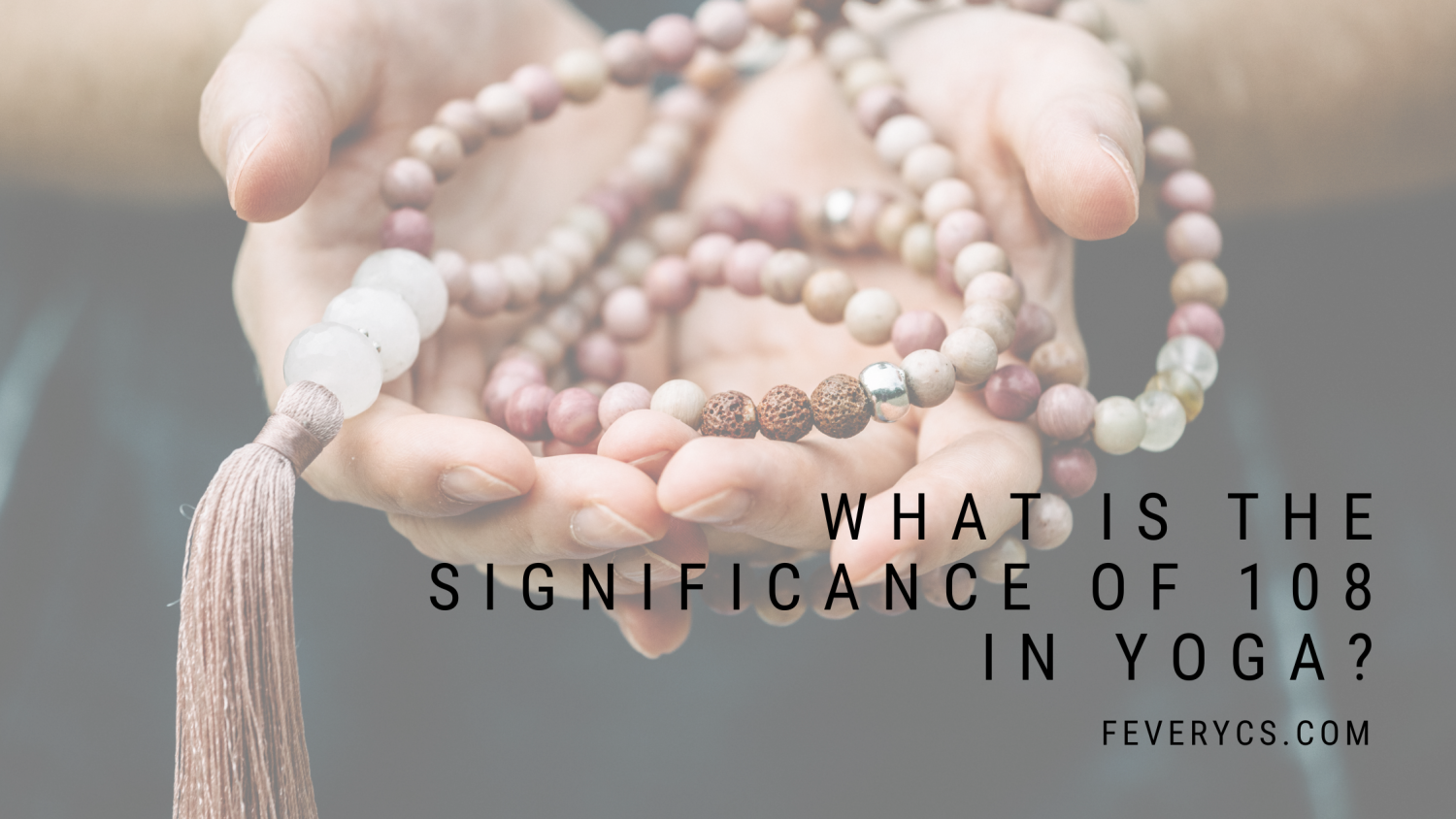
The number 108 is considered a sacred number in Hinduism, Buddhism and yogic tradition. Malas or Japa beads come in a string of 108 and are used for devotional meditation, mantra and prayer. With each bead a mantra or prayer is repeated to meet a total of 108. The Meru bead is the larger bead or tassel on the mala and is not part of the 108. This is the guiding bead and marks the beginning and end of the mala/chant/prayer/mantra. We lean toward hand made, authentic beads like red carnelian or Rudraksha Tibetan beads.

Fever offers 108 Sun Salutations or Surya Namaskar A to celebrate our transition into Spring. Spring is a season of phenomenal renewal. The earth awakens from its slumber and blossoms into new life, new beginnings and new awareness. It is a great time to reflect on health and well being. Together we will flow and breathe to become one body, one heart and one mind.

For those who feel especially drawn to the deeper meaning of ritual and repetition, private yoga sessions offer an opportunity to explore practices like 108 Sun Salutations in a more intentional, supported way. Working one-on-one allows us to pace the breath, movement, and mindset to honor both the physical and symbolic significance of the number without overwhelm. Whether you’re moving through 108 as a seasonal reset, a personal milestone, or a form of moving meditation, private instruction creates the space to approach this sacred practice with clarity, safety, and purpose.

Here are a few interpretations of the significance of the number 108.

  • Sanskrit alphabet has 54 letters. Each letter has a masculine (Shiva) and feminine (Shakti) energy 54 X 2 = 108
  • Desires. There are said to be 108 earthly desires in mortals.
  • Time. It is said we have 108 feelings. 36 related to the past, 36 related to the present, and 36 related to the future.
  • Astrology. There are 12 constellations and 9 arc segments. There are 12 houses and 9 planets. 12 X 9 = 108
  • The diameter of the sun is 108 times the earth.

Please join us in studio to become one. One Mind. One Body. One Spirit. Check back for more offerings of 108 Sun Salutes or book your private session today.


Portfolio Items