Posts about yoga teacher training programs, what to expect, how to prepare, and how the journey shapes your practice.

Think you can teach yoga?

Think You Can Teach Yoga? Get Certified.

5 Questions to Ask When Considering a Yoga Teacher Training Program

Whether you’ve decided you want to teach yoga or simply dig deeper into your own practice, it’s often daunting to sift between yoga styles and teaching methods to decide where to complete your teacher training. That’s why we’ve pulled together five questions to consider when selecting the best teacher training program for you.

1. Is the yoga teacher program Yoga Alliance Certified?

As the international governing body for yoga, the Yoga Alliance sets the standard for teacher training programs. If you hope to teach yoga at some point in your future, make sure you look for this certification – otherwise you won’t qualify for insurance. We know, insurance doesn’t feel very yogic, but this certification basically says you’ve got a stamp of approval to teach yoga.

2. What is the yoga teacher training schedule like?

All teacher training programs start out with 200 hours. Some are immersion classes – meaning you’re cramming the entire program into two weeks. These make it quite difficult to retain the information or get enough practice before teaching. At Fever, our program is extended over 3.5 months to help ensure you have the depth of knowledge and experience needed before beginning to teach. As a bonus, this type of program is perfect for people leading busy lives with work or family commitments.

3. How does the yoga program teach anatomy?

At first, this may not seem like the biggest deal when you’re trying to memorize all the Sanskrit names for postures or figuring out how to properly sequence. But anatomy is huge!! You must understand alignment and muscular engagement before you become a yoga guide. A solid understanding of human anatomy will enable you to bring a high level of consciousness to your teaching as well as prevent injury. Make sure the program you select has a strong focus on anatomy. Fever offers 11 modules in anatomy training in relation to yoga.

4. How does the yoga teacher training program balance the subjects it teaches?

Each training course devotes a minimum number of hours to subjects like posture, anatomy and philosophy, but each course also emphasizes different areas and brings its own style. What matters most to you? Spiritual training, a focus on alignment, or ample time to practice teach? Pick a program that speaks your language. If you’re looking for emphasis on ALL of these things, you should definitely consider our program. We hit all the bases necessary to take your practice and your skills to the next level.

5. What are the instructors like?

Your studio instructors will be a large part of your training, from their knowledge to their personality to their years of experience teaching. Take some time to research the teachers at various studios, read reviews, and take public classes from them. Make sure you feel that the teachers are incredibly knowledgeable in the field of yoga and can guide beginners and seasoned practitioners through a safe and thorough experience.

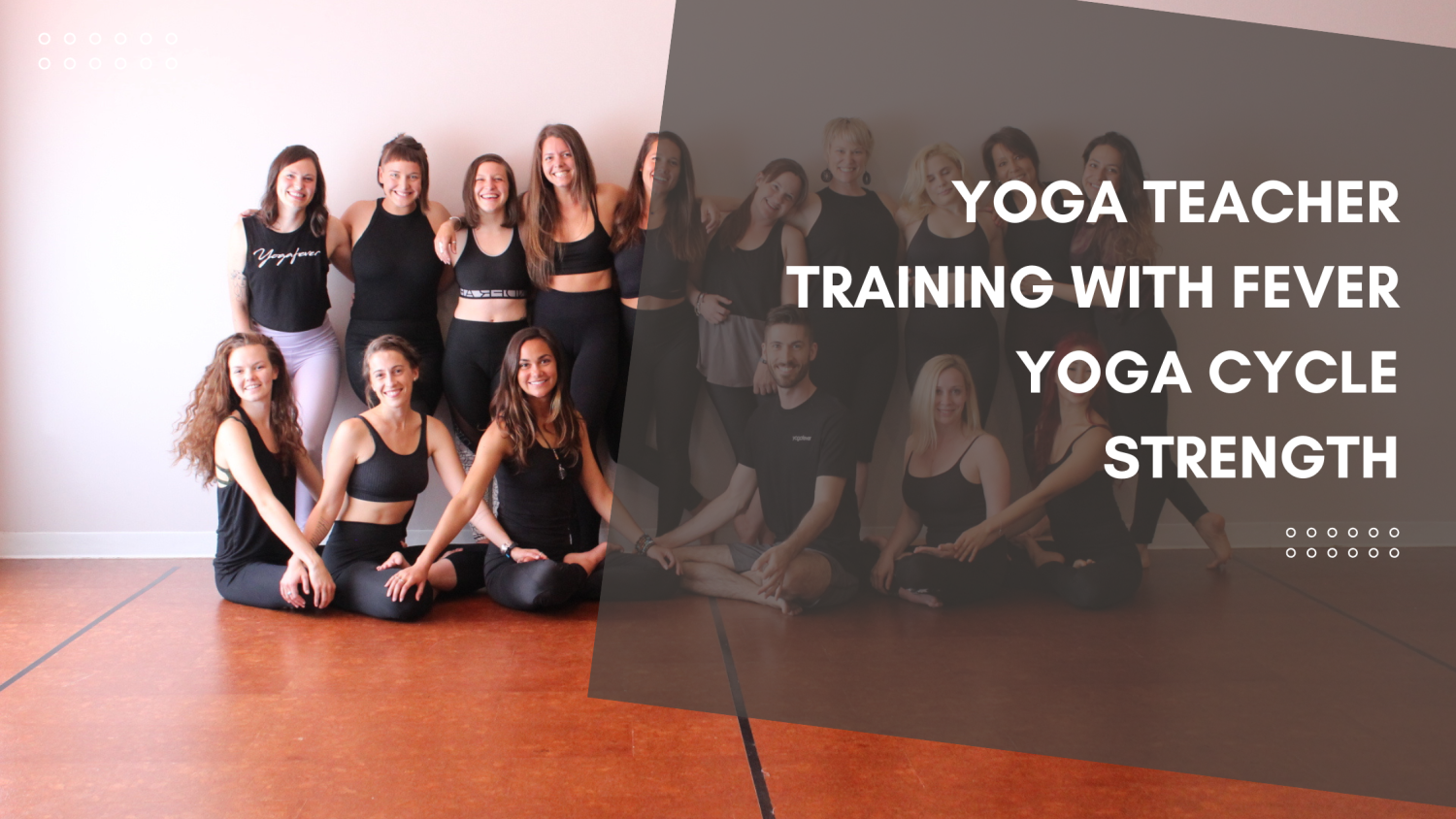
Fever | Yoga Cycle Strength offers a 200 hr Yoga Teaching Training Program

You’ll learn about human anatomy, including posture, integrated movement and the prevention of common injuries. You’ll study philosophy, including the eight limbs, and the Sanskrit language. You’ll practice sequencing, incorporating meditation, classical yoga, vinyasa breath & movement, and the use of props. Additionally, you’ll receive unlimited support for the duration of the program.

Make sure to register early for a special early-bird discount. For more information about our course visit our Teacher Training Page. If you have questions, please call: (616) 805-3603 or email: admin@feverycs.com


Introducing Kundalini Yoga

Introducing Kundalini Yoga

What is Kundalini Yoga?

“The primary objective of Kundalini is to awaken the full potential of human awareness in each individual; that is, recognize our awareness, refine that awareness, and expand that awareness to our unlimited Self. Clear any inner duality, create the power to deeply listen, cultivate inner stillness, and prosper and deliver excellence in all that we do.” – Kundalini Research Institute

Yoga itself has dozens of variations in philosophy and style. Some are structured as a physical workout while others put a strong emphasis on meditation. Kundalini is a little of both – an uplifting blend of spiritual and physical practices that incorporates movement, dynamic breath, meditation, and chanting of mantras. Its aim is to awaken higher consciousness in its practitioner by activating energy centers throughout the body.

In Sanskrit, the word “Kundalini” means “coiled snake.” Early Eastern religions believed that everyone possesses a divine energy at the base of the spine. It’s something we’re born with, but we each must strive to uncoil it. Through Kundalini, we turn potential energy into kinetic energy, awakening our Higher Self.

3 Practical Reasons to Try Kundalini Yoga:

Often referred to as the “yoga of awareness,” Kundalini focuses on the expansion of your sensory awareness. It is one of the most powerful and complete yoga practices you’ll encounter, as it creates an aligned relationship between the body, mind, and soul.

Building Awareness Will Expand Your Life: Kundalini yoga is designed to strengthen your intuition and willpower. As you unravel the energy within you, you’ll gain awareness and an improved presence in the world, resulting in new opportunities and experiences.

Discover the Magic Outside of Your Comfort Zone: Kundalini combines so many elements, from stretching to breath work to sound meditations. The spontaneous nature of each class will keep you light on your feet and ready for anything.

Find Your Voice and Share with the World: Kundalini yoga helps us find our voice and discover the courage to use it kindly and effectively.

Don’t worry if you’ve never heard of, or practiced, this form of yoga before. As always, Kundalini asks that you honor yourself, move at your own pace, and listen to your body’s needs – asking for adjustments and modifications when necessary.

3 reasons to become a yoga teacher

3 Reasons to Become a Yoga Teacher in Grand Rapids


If you’re interested in the yogic path, yoga teacher training is the best thing you can do for yourself. I know there’s usually not an ideal time to launch into this experience. But is there ever a perfect time to do anything? Nope. Sometimes you just have to lead with your heart and trust in the process.

Fever has offered multiple Yoga Teacher Training Programs and will continue to meet the demand of the community we serve. Upon completion of our Yoga Alliance 200 hour program, you’ll deepen your practice and understanding of yoga, learn accurate body alignment and master the art of teaching yoga with confidence and authenticity.

Besides these lessons, you’ll also learn the incredible power of self-love, confidence and body awareness. Below we have highlighted just a few of the many reasons to take the plunge.

Reason 1. You’ll Learn Self-Love: Accepting ourselves exactly as we are can be pretty darn impossible. Many of us struggle with jealousy in our friendships, families, and work settings – partly because we live in a comparative world where we can find pictures of other people’s lives at the touch of a button. Our inner judge can be a critical and demanding taskmaster, causing us to speak to ourselves with harsher words than we would ever direct toward others.

Through our teacher training program, you’ll learn to accept yourself for who you are – all flaws, insecurities, and doubts included. You’ll discover the power of a positive mentality, which will help you narrow in on the aspects that make you uniquely you! But we won’t leave it up to you to figure this out; we’ll arm you with the tools and mental strength to fight societal pressures.

Reason 2. You’ll Build Self-Confidence: Building and maintaining self-confidence is one of the toughest tasks we’re asked to do. Without self-confidence, we stay home and avoid certain events; we fail to chase our biggest dreams; we let fear conquer us.

Our teacher training program will play an influential role in boosting or restoring your self confidence by giving you a reality check: there are some tasks and activities we’re capable of performing and others that aren’t meant to be. For example, some of my students have incredible balance, while others have immense flexibility. In the same way, we each have a variety of talents in our lives. The meditation and breathing exercises you’ll master as a yoga teacher will help you grasp the concept that our limitations are not downfalls; there are simply some things were better at than others. As you continue to grow your teaching skills, your confidence and self-awareness will intensify.

Reason 3. You’ll Gain Awareness (and Appreciation) of Your Body: It’s incredibly difficult to love our bodies as they are. In a world of highly-edited advertisements and instant social media access, it’s understandable to have a hate-filled relationship with your bodies. So, how does becoming a yoga teacher help us move past these fixations and have an appreciation of our body? The answer: give up the notion that yoga is a get-thin-quick routine and, instead, embrace the practice of yoga on a much deeper level.

Through my experience as a yoga teacher, I’ve realized that yoga helps me appreciate my body as a whole, not in segments. It focuses on strength, flexibility, balance, and breath, rather than on appearance. For example, when I do a balance pose I rely on my entire body to support me, even the parts that I dislike. All of the repetitive practice in body mindfulness you experience in teacher training will carry over into your regular, off-the-mat life, helping you proactively care for your body.

Those of you who enroll in our Yoga Teacher Training Program will spend a lot of time with myself, Shannon Austin, Owner and Operator of Fever who is leading the Spring of 2025. We are looking forward to fully supporting each trainee on their journey toward all things yoga. After the program, TeamFever works hard to keep your teaching skills going by connecting you with possible teaching positions at the studio and within the community (if you’re ready).

If you’re even slightly considering signing up for Yoga Teacher Training at Fever, let’s connect. I’d love to hear from you. Please call us at 616-805-3603, email us at info@feverycs.com, or stop by the studio. The time is now yoga-teacher-wanna-be. You can do it, and we are here to guide you every step of the way.

5 tips for teaching yoga to your kids

5 Tips for Teaching Yoga to Your Kids

Today we’re thinking about all our parents, educators and anyone who works with children. Have your kids ever tried to climb on your mat with you, or watched with eager eyes as you practice yoga? If you’re a teacher, do you ever find yourself in need of a way to help your little ones release some stress in a controlled fashion? If you’ve never tried teaching your kids a yoga pose, now’s the time.

Children live in the fast-paced world of busy parents, school pressures, after-school hobbies, competitive sports and more. Encouraging them to develop a yoga practice can help counter these stressors. Starting yoga early is a wonderful habit for children. Yoga encourages self-esteem and body awareness with a non-competitive physical activity. It helps them feel more focused, calm and confident. From antsy five-year-olds to exhausted fourteen-year-olds, yoga offers a handful of benefits that help kids re-energize, release stress and increase their self-awareness.

5 tips for teaching your children yoga:

  • Focus on the basics– Start with simple poses, such as Downward Dog, Tree Pose or Warrior II. Show them the proper form, but expect quite a bit of wiggling and mistakes as they learn. If you have a group of children you’re teaching, try a form of duck-duck-goose to quiz them on the names of a few poses.
  • Get them their own yoga gear – Let them pick out a fun pair of leggings or a yoga mat. This way, they can begin making their practice their own – they’ll be excited to roll out their own mat and get jiggy with their down dog.
  • Play with animal poses– At young ages, children are naturally quite flexible. Ask them to go further in their poses (when they’re ready). To get started try Butterfly, Cobra, Happy Baby and Tree as these will likely resonate with children. They have the chance to be more playful and silly as they try to maintain balance, roll around, giggle, and try again.
  • Share mindfulness techniques– Allow them to find the present moment and engage with the surroundings around them with their eyes closed. Notice sounds, scents, tastes, energy points etc. they see if they can find deeper breathing without straining or trying to hard.
  • Keep it lighthearted– For young children, you can’t expect their attention spans to last as long as yours. (We’re sure you already know this) Aim for five-ten minute intervals, mixed in with some fun breathing and mindfulness training.

Once you teach your children the basics of yoga and mindfulness, they can begin to incorporate the beloved practice into their own daily lives. Help your little ones realize that movement and mindfulness is a great release from frustrations at school or in their relationships. Show your older children the value of yoga as a stress reliever from the competitive nature of school, sports and clubs.