Himalayan Salt Stone Massage vs. Hot Basalt Stone Massage: What’s the Difference?
Stone massage is one of the most grounding and deeply restorative forms of bodywork available. While traditional hot stone massage and Himalayan salt stone massage may look similar at first glance, the type of stone used changes not only how the heat feels in the body, but also how the nervous system responds.
Both approaches work with warmth and earth energy — but they offer distinctly different experiences.
The Element of Earth in Both Stone Therapies
Both basalt stones and Himalayan salt stones come directly from the earth, which is one of the reasons stone massage feels so physically grounding and stabilizing. Basalt is a volcanic rock formed from rapidly cooled lava, carrying dense earthen and fire-element qualities. Himalayan salt stones are formed from ancient sea beds compressed into crystal over millions of years, holding the energy of earth, water, pressure, and time.
This deep geological origin is what gives stone therapies their unmistakable sense of weight, stability, and nervous-system settling.
Traditional Hot Stone Massage
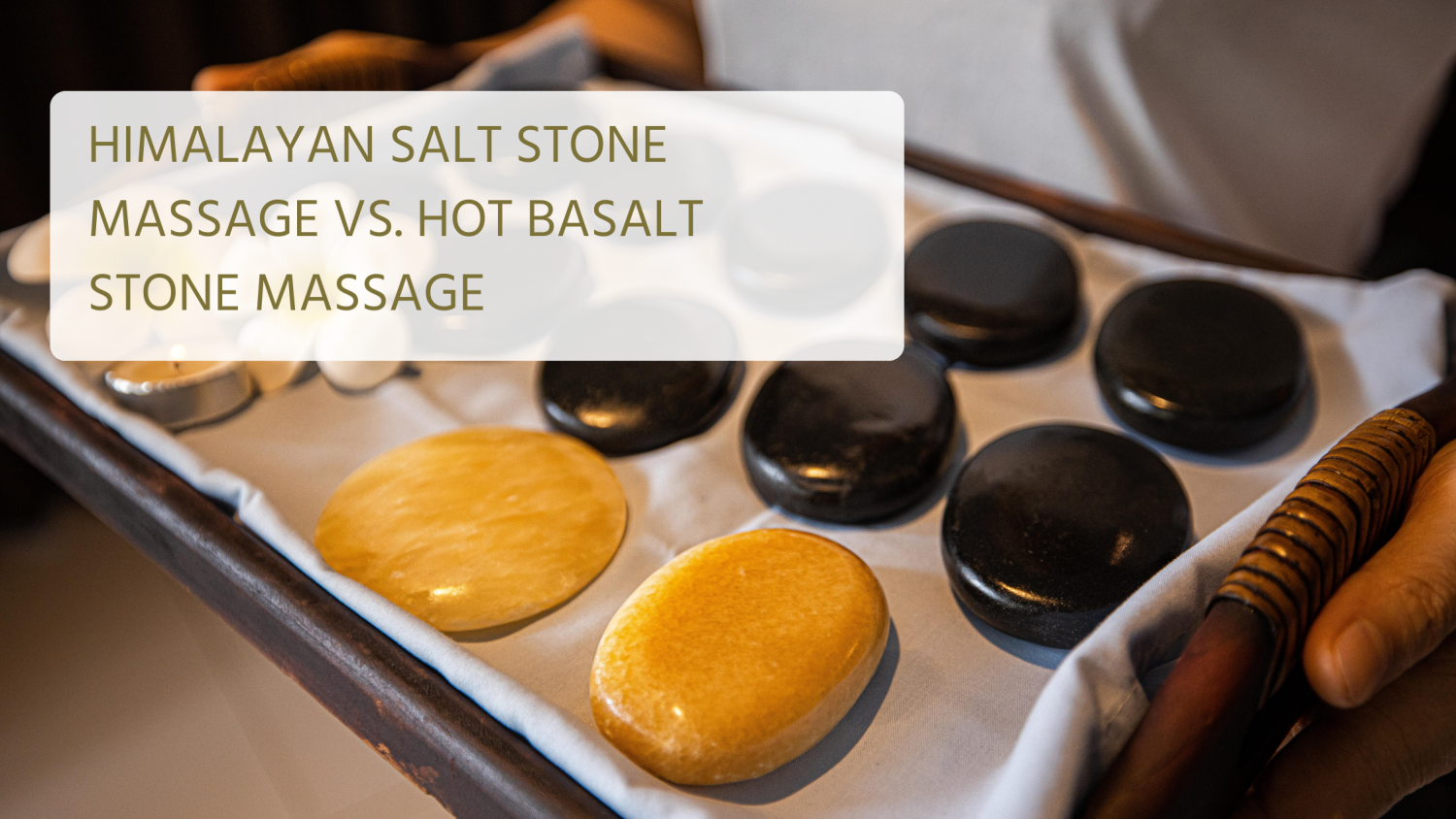
Traditional hot stone massage uses smooth basalt stones that are heated and placed on key areas of the body, then actively used to glide along muscles. Basalt is dense and conducts heat efficiently, allowing warmth to transfer deeply into muscle tissue.
Primary benefits include:
• Deep muscle relaxation
• Increased circulation
• Faster tissue softening
• Reduced joint stiffness
• Enhanced parasympathetic nervous system activation
Basalt stones tend to feel more penetrating in their heat. The warmth reaches deeper layers quickly, making this style particularly effective for dense, stubborn muscular holding in the back, hips, and shoulders.
Himalayan Salt Stone Massage
Himalayan salt stone massage uses hand-carved salt crystal stones that are gently heated and used in place of basalt. High-quality salt stones — especially larger-format stones — are fully capable of holding steady warmth throughout a complete 60-minute massage when properly heated.
The heat from salt stones feels different than basalt. It is softer, more diffused, and more enveloping rather than sharply penetrating. Many people describe it as nurturing rather than intense.
In addition to heat, salt stones offer:
• Trace mineral absorption
• Gentle exfoliation
• Subtle energetic grounding
• A soothing, healing warming effect which creates a deep relaxation effect
• Increased circulation
• Faster tissue softening
• Reduced joint stiffness
• Enhanced parasympathetic nervous system activation
The Mineral and Energetic Component of Salt Stones
Unlike basalt, Himalayan salt stones contain naturally occurring trace minerals formed through ancient oceanic compression. During a warm session, microscopic mineral contact through the skin is believed to contribute to the uniquely stabilizing quality many people feel from salt stone massage.
While this isn’t a medical “detox,” many clients experience salt stone work as energetically centering, emotionally soothing, and deeply nourishing to an overstimulated nervous system. The combination of warmth, mineral contact, steady pressure, and weight often produces a profound parasympathetic shift — a feeling of being anchored back into the body.
Basalt hot stone massage:
• Stronger, more penetrating heat
• Faster tissue softening
• Ideal for dense muscular tension
• Feels physically powerful and deeply therapeutic
Himalayan salt stone massage:
• Softer, more diffused warmth
• Gentle skin contact and subtle exfoliation
• More nurturing nervous-system response
• Feels enveloping, grounding, and emotionally calming
Both retain heat effectively when properly prepared. The difference is not about which holds heat longer — it’s about how the heat is experienced by the body.
Which One Should You Choose?
Traditional hot stone massage may be ideal if:
• You carry deep muscular tension
• You prefer strong heat and deep release
• You respond well to intense warmth
Himalayan salt stone massage may be ideal if:
• You are sensitive to aggressive heat
• You want a gentler yet still warm experience
• You are seeking emotional and nervous-system calming
• You enjoy the grounding quality of earth and mineral therapy
Many people rotate between both styles depending on stress level, season, and physical demand.
A Final Word
Both basalt stones and Himalayan salt stones work through the shared language of heat and the grounding element of earth. One offers deeper thermal penetration, the other offers mineral-rich warmth and subtle energetic settling. Neither is better — they simply serve different layers of the body and nervous system.
Choosing between them isn’t about intensity versus luxury. It’s about what your body needs most in that moment: deep muscular release or gentle, mineral-rich restoration.