
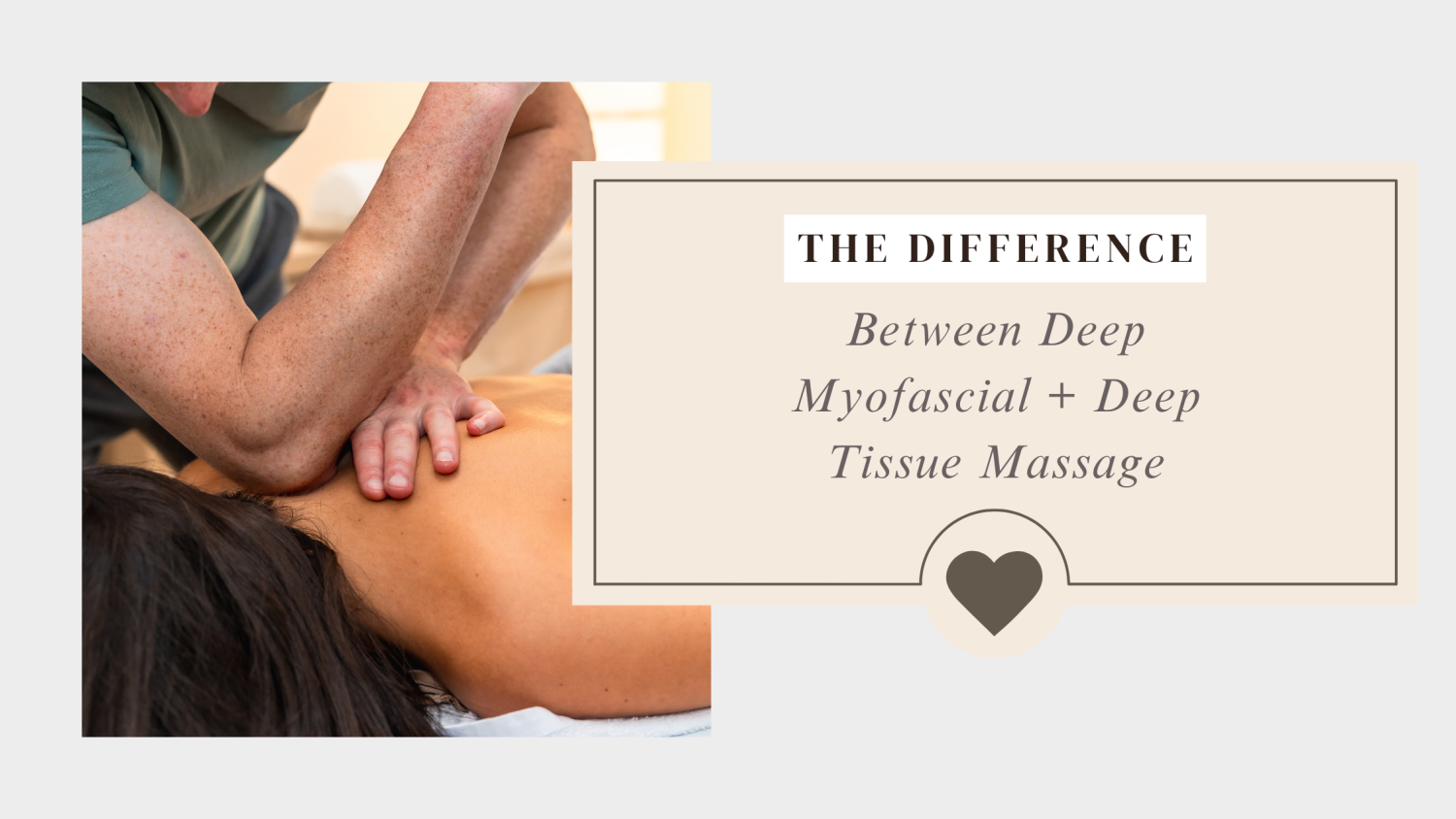
The Difference Between Deep Myofascial and Deep Tissue Massage
Understanding the Difference Between Deep Myofascial and Deep Tissue Massage
Deep myofascial massage and deep tissue massage are often used interchangeably, but they are not the same. While both can involve slow, intentional pressure and can feel intense at times, they work with the body in very different ways. Understanding the difference helps clients choose the right style for their pain patterns, mobility goals, and nervous system needs.
What Is Deep Tissue Massage?
Deep tissue massage focuses primarily on muscles and connective tissue layers beneath the surface. The goal is to address chronic muscle tension, adhesions, and restricted movement caused by overuse, injury, or postural strain.
How Deep Tissue Massage Is Performed
Pressure is typically firm to deep, applied directly into muscle fibers using forearms, elbows, knuckles, or reinforced hands. Techniques often follow the direction of muscle fibers and target specific areas of tightness or pain.
Who Benefits Most From Deep Tissue Massage
Deep tissue massage is commonly used for chronic neck and shoulder tension, low back pain, tight hips or hamstrings, postural imbalances, and repetitive strain patterns. This style can feel intense and sometimes uncomfortable, especially when working into long-held muscle tension. You will see true Deep Tissue in a more clinical setting versus a spa setting. The environment will typically match the massage experience.
What Is Deep Myofascial Massage?
Deep myofascial massage works primarily with fascia, the connective tissue web that surrounds muscles, bones, nerves, and organs. Fascia is sensory-rich, highly responsive, and closely connected to the nervous system.
How Deep Myofascial Massage Is Performed
Instead of pushing through tissue, myofascial work sinks slowly into layers, waits for the tissue to soften, and follows the body’s natural lines of tension. Pressure can be deep, but it is sustained and intentional rather than forceful.
What Deep Myofascial Massage Feels Like
Deep myofascial massage often feels slower, quieter, and more internal. Clients may notice spreading sensations, warmth, subtle unwinding, or emotional release rather than sharp intensity.
Who Benefits Most From Deep Myofascial Massage
This style is commonly used for chronic pain that does not respond well to force, restricted movement or joint stiffness, fascial adhesions or scar tissue, and stress-related tension held throughout the body. You will find Deep Myofascial with well-informed therapists that understand the mechanics of the body. This style is seen more in a relaxing setting where the environment matches the movement.
Key Differences Between Deep Myofascial and Deep Tissue Massage
The primary difference lies in how pressure is applied and which tissue is being addressed. Deep tissue massage focuses on muscle fibers using more direct compression, while deep myofascial massage works with fascia using slower, sustained pressure that allows tissue to respond organically.
Deep Tissue Massage at a Glance
Deep tissue massage targets muscle fibers, uses direct and compressive pressure, often follows anatomical muscle lines, and focuses on mechanical release of tight tissue.
Deep Myofascial Massage at a Glance
Deep myofascial massage targets fascia and connective tissue, uses slow sustained pressure, waits for tissue to soften, and works with the nervous system as well as physical structure.
Which Massage Is Better for Chronic Pain?
When it comes to chronic pain, deep myofascial massage is often the more effective and sustainable approach. Chronic pain rarely exists only in muscle tissue. It frequently involves fascial restriction, altered movement patterns, and a sensitized nervous system. Applying heavy or forceful pressure to already reactive tissue can reinforce guarding and lead to short-term relief followed by rebound tension.
Deep myofascial work allows tissue to release gradually without triggering defensive responses. By giving fascia time to adapt and unwind, this approach supports longer-lasting change with less post-session soreness or inflammation.
Blending Techniques for Optimal Results
While deep myofascial principles form the foundation of a safer, more responsive approach, skilled therapists may thoughtfully integrate deep tissue techniques when appropriate. The difference is not the depth of pressure, but the method. Pressure is applied with awareness, patience, and responsiveness rather than force.
Blending techniques becomes effective when muscle work supports fascial release, not when it overrides it. The tissue leads, and the therapist follows.
Choosing the Right Massage for Your Body
If you experience persistent pain, global stiffness, stress-related tension, or feel that aggressive pressure has not worked for you in the past, deep myofascial massage may be the better choice. It offers depth without force and release without strain.
If your tension is clearly muscular and related to activity or repetitive use, carefully applied deep tissue work can still be useful, especially when guided by myofascial principles.
Final Thoughts on Deep Myofascial vs Deep Tissue Massage
Both deep myofascial massage and deep tissue massage aim to relieve pain and restore movement, but they operate through very different mechanisms. A myofascial approach prioritizes tissue responsiveness, nervous system safety, and long-term change over immediate intensity.
When the body is given time and space to respond, release becomes more complete and more durable. Depth does not need to be aggressive to be effective.

